D I S C O V E R    L I F E   
Bee Hunt! Odonata Lepidoptera 
  HomeAll Living ThingsIDnature guidesGlobal mapperAlbumsLabelsSearch
  AboutResearchEducationProceedingsPolistes FoundationPartnersLinksHelp

Acer platanoides L.

Norway Maple

Links

80x5 - 240x3 - 240x4 - 320x1 - 320x2 - 320x3 - 640x1 - 640x2
Set display option above.
Click on images to enlarge.
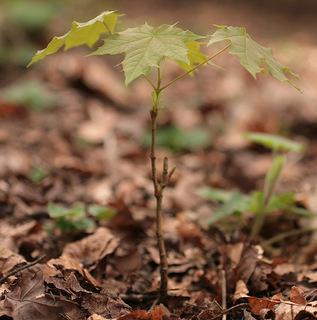
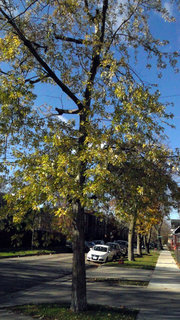
Acer platanoides, Whole tree
© Copyright Steve Baskauf, 2002-2005
Acer platanoides, Whole tree
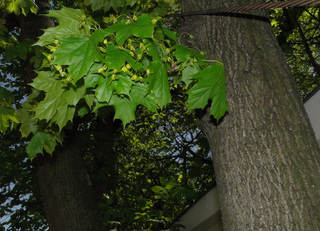
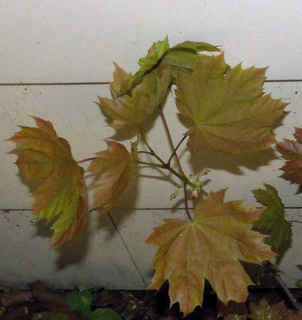
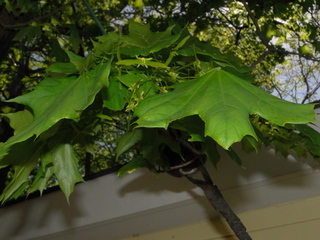
Acer platanoides, Leaf
© Copyright Steve Baskauf, 2002-2005
Acer platanoides, Leaf

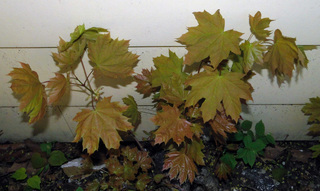
Acer platanoides, Leaf
© Copyright Steve Baskauf, 2002-2005
Acer platanoides, Leaf
Acer platanoides, Twig
© Copyright Steve Baskauf, 2002-2005
Acer platanoides, Twig

Acer platanoides, Twig
© Copyright Steve Baskauf, 2002-2005
Acer platanoides, Twig
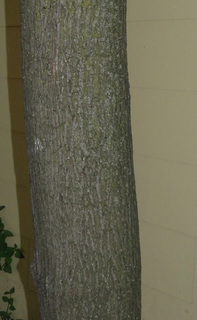
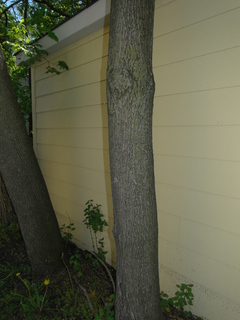
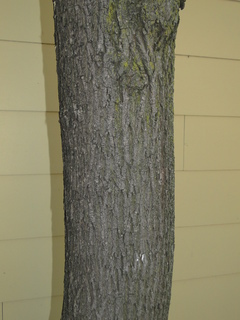
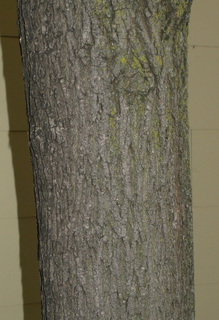
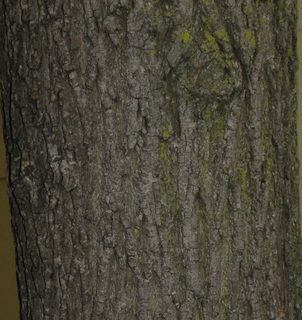
Acer platanoides, Bark
© Copyright Steve Baskauf, 2002-2005
Acer platanoides, Bark

Acer platanoides, Leaf
© Copyright Steve Baskauf, 2002-2005
Acer platanoides, Leaf
Acer platanoides, Twig
© Copyright Steve Baskauf, 2002-2005
Acer platanoides, Twig

Acer platanoides, Twig
© Copyright Steve Baskauf, 2002-2005
Acer platanoides, Twig
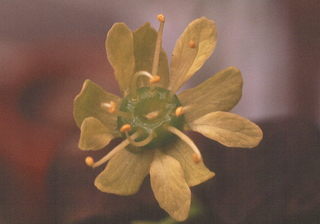
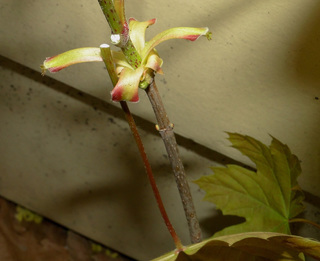
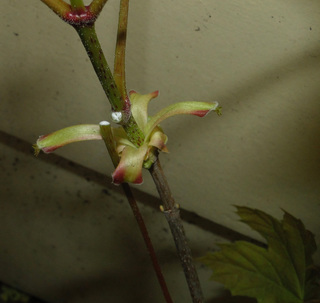
Acer platanoides, Flower
© Copyright Steve Baskauf, 2002-2005
Acer platanoides, Flower

Acer platanoides, Flower
© Copyright Steve Baskauf, 2002-2005
Acer platanoides, Flower
Acer platanoides, Fruit
© Copyright Steve Baskauf, 2002-2005
Acer platanoides, Fruit

Acer platanoides, Fruit
© Copyright Steve Baskauf, 2002-2005
Acer platanoides, Fruit
Acer platanoides, Flower
© Copyright Steve Baskauf, 2002-2005
Acer platanoides, Flower

Acer platanoides, Flower
© Copyright Steve Baskauf, 2002-2005
Acer platanoides, Flower
Acer platanoides, _fall_leaf.JP80279_24.320.jpg
© Photographer/source
Acer platanoides, fall leaf
JP80279_24

Acer platanoides, _fruit.JP80279_22.320.jpg
© Photographer/source
Acer platanoides, fruit
JP80279_22

Names
Scientific source:
      Integrated Taxonomic Information System


Following served from Trees and Shrubs of the University of Richmond Campus
   
Top | See original context

Following served from Trees and Shrubs of the University of Richmond Campus
   
Top | See original context

Following served from Naturhistoriska riksmuseet
   
Top | See original context

Following modified from Virginia Tech Dendrology
   
Top | See original

Following modified from Plants Database, United States Department of Agriculture
   Top | See original

Link: Skip repetitive navigation links
USDA and NRCS Identifier NRCS Logo
USDA.gov Web Site PLANTS photo banner
PLANTS Home  about PLANTS  PLANTS Team  Partners of PLANTS  What  National Plant Data Center Web Site  Help using PLANTS  Contact PLANTS
 
 Search the PLANTS Web site
 Name Search

 State Search
 Advanced Search
 Search Help
PLANTS Topics
 
 Alternative Crops
 Characteristics
 Classification
 Culturally Significant
 Distribution Update
 Fact Sheets & Plant Guides
 Invasive and Noxious Weeds
 Links
 Plant Materials Publications
 Threatened & Endangered
 Wetland Indicator Status
 
PLANTS Image Gallery
 
 40,000+ Plant Images
 Submit Your Digital Images
 
Download PLANTS data
 
 Complete PLANTS Checklist
 State PLANTS Checklist
 Advanced Search Download
 Symbols for Unknown Plants
 NRCS State GSAT Lists
 NRCS State Plants Lists
 PLANTS Posters
 
Related tools
 
 Crop Nutrient Tool
 Ecological Site Information System
 PLANTS Identification Keys
 Plant Materials Web Site
 Other NRCS Tech
Resources
 VegSpec
 
 
You are here: Home / PLANTS Profile Printer-Friendly Printer-Friendly / Plug-Ins
PLANTS Profile
Alabama Alaska Arizona Arkansas California Colorado Florida Georgia Hawaii Iowa Kansas Louisiana Mississippi Missouri Nebraska Nevada New Mexico North Dakota Oklahoma South Carolina South Dakota Texas Utah Wyoming Puerto Rico Virgin Islands Alberta Manitoba Labrador Newfoundland Saskatchewan Yukon Northwest Territories Nunavut Greenland Saint Pierre and Miquelon


Acer platanoides L.
Norway maple

       
Symbol:   ACPL  
Group:   Dicot  
Family:   Aceraceae  
Duration:   Perennial  
Growth Habit:   Tree  
Native Status:  
L48    I
CAN    I


Click on the image below to enlarge it and download a high-resolution JPEG file.
Photo of Acer platanoides L.
Steve Hurst. Provided by ARS Systematic Botany and Mycology Laboratory . Usage Requirements .
 
More Information:
 

Images:
Acer platanoides L.

Click on a thumbnail to view an image, or see all the Acer thumbnails at the PLANTS Gallery
View a larger version of this image and Profile page for Acer platanoides L. View a larger version of this image and Profile page for Acer platanoides L. View a larger version of this image and Profile page for Acer platanoides L. View a larger version of this image and Profile page for Acer platanoides L. View a larger version of this image and Profile page for Acer platanoides L. View a larger version of this image and Profile page for Acer platanoides L. View a larger version of this image and Profile page for Acer platanoides L.
 

Synonyms:
Acer platanoides L.

  ACPLS Acer platanoides L. var. schwedleri G. Nicholson
 

Distribution:
Acer platanoides L.

View Native Status
Distribution Map Legend

See U.S. county distributions (when available) by clicking on the map or the linked states below:

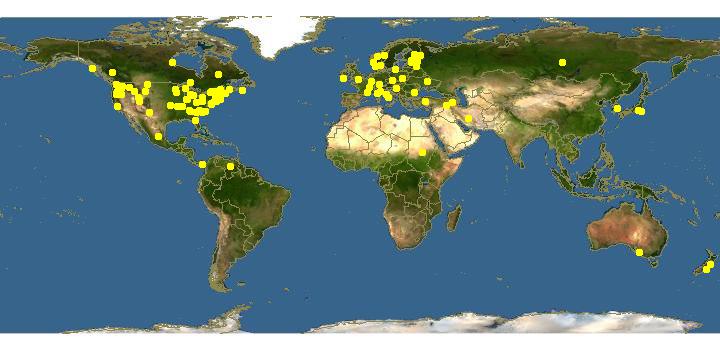
USA ( CT , DC , DE , ID , IL , IN, KY , MA , MD, ME , MI , MN, MT , NC, NH , NJ , NY , OH , OR , PA , RI , TN , VA , VT , WA , WI , WV ), CAN (BC, NB, NS, ON, PE, QC)
 

Related Taxa:
Acer platanoides L.

View 1 genera in Aceraceae , 27 species in Acer
 

Classification:
Acer platanoides L.

Click on a scientific name below to expand it in the PLANTS Classification Report.
   
Kingdom Plantae – Plants
Subkingdom Tracheobionta – Vascular plants
Superdivision Spermatophyta – Seed plants
Division Magnoliophyta – Flowering plants
Class Magnoliopsida – Dicotyledons
Subclass Rosidae
Order Sapindales
Family Aceraceae – Maple family
Genus Acer L. – maple
Species Acer platanoides L. – Norway maple
 

Noxious Weed Information:
Acer platanoides L.

This plant is listed by the U.S. federal government or a state. Common names are from state and federal lists. Click on a place name to get a complete noxious weed list for that location, or click here for a composite list of all Federal and State Noxious Weeds .

Connecticut :
Norway maple              Invasive, not banned
Massachusetts :
Norway maple              Prohibited
 

U.S. Weed Information:
Acer platanoides L.

Norway maple

This plant can be weedy or invasive according to the authoritative sources noted below. This plant may be known by one or more common names in different places, and some are listed above. Click on an acronym to view each weed list, or click here for a composite list of Weeds of the U.S.

N'EAST        Uva, R.H., J.C. Neal, & J.M. DiTomaso. 1997. Weeds of the Northeast . Cornell University Press. Ithaca, New York. 397pp.
WI        Hoffman, R. & K. Kearns (eds.). 1997. Wisconsin manual of control recommendations for ecologically invasive plants . Wisconsin Dept. Natural Resources. Madison, Wisconsin. 102pp.
 

Introduced Information:
Acer platanoides L.

This plant is introduced to some part of the PLANTS Floristic Area, though it may be native in other parts. Click on link below for a partial or complete list of PFA introduced plants.

Scientific Name= A | B | C | D | E | F | G | H | I | J | K | L | M | N | O | P | Q | R | S | T | U | V | W | X | Y | Z | all
Common Name= A | B | C | D | E | F | G | H | I | J | K | L | M | N | O | P | Q | R | S | T | U | V | W | X | Y | Z | all
 

More Accounts and Images:
Acer platanoides L.

View photographs from CalPhotos.

View species account from ARS Germplasm Resources Information Network (GRIN).

View taxonomic account from Integrated Taxonomic Information System (ITIS) for ITIS Taxonomic Serial Number 28755.

View species account from Kemper Center for Home Gardening.

View photographs and distribution from University of Tennessee Herbarium.

View photographs and distribution from University of Washington Burke Museum.

View species account and photographs from University of Wisconsin - Stevens Point Freckmann Herbarium.


Related Web Sites:
Acer platanoides L.

CT-Invasive Plant Species Identification Sheets (USDA NRCS)

Michigan State University Extension, Home Horticulture: abstract and images

NY-Invasive Plant Council of New York State-Top 20

Oregon State University Horticultural Plant Materials: images and text

Swedish Virtual Flora: images & text (in Swedish)

University of Delaware: abstract & image


Time Generated: 11/21/2009 06:16 PM MST  

 PLANTS Home | USDA.gov | NRCS | Site Map | Policies and Links
Accessibility Statement | Privacy Policy | Non-Discrimination Statement

Following modified from Global Invasive Species Database
   Top | See original

* * * * *  
* * * * * *
*
* * *  
* * * *
*
* border border
*
Global Invasive Species Database 100 of the worst Donations home
*
Standard Search Standard Search Taxonomic Search   Index Search
*
*

    Acer platanoides (tree)
Ecology Distribution Management
Info
Impact
Info
References
and Links
Contacts * *


       Acer platanoides (Photo: Bill Cook, Michigan State University, www.forestryimages.org) - Click for full size    Acer platanoides flower (Photo: Bill Cook, Michigan State University, www.forestryimages.org) - Click for full size    Acer platanoides bark(Photo: Paul Wray, Iowa State University, www.forestryimages.org) - Click for full size    Acer platanoides (Photo: Paul Wray, Iowa State University, www.forestryimages.org) - Click for full size    Acer platanoides fruit (Photo: Paul Wray, Iowa State University, www.forestryimages.org) - Click for full size
    Taxonomic name: Acer platanoides L.
    Synonyms: Acer platanoides f. stollii Schwer., Acer platanoides subsp platanoides , Acer platanoides subsp turkestanicum , Acer platanoides var schwedleri K. Koch, Acer platanoides var schwedleri Nichols., Acer turkestanicum
    Common names: érable plane (French), Norway maple, Spitzahorn (German)
    Organism type: tree
    Acer platanoides is a decidous maple, native to Europe. It is commonly planted as an ornamental along streets and in parks. It has escaped and invaded natural forested habitats all over North America. The dense canopy of A. platanoides's shades out native species and the shallow root system prevents native species from establishing. Its foliage releases toxins that alter the soils fungal and microbial composition. The full impact of this species has not been seen yet as the majority of Acer platanoides are still in the sapling stage awaiting openings in the canopy.
    Description
    Acer platanoides is a deciduous tree with a broad, rounded crown that can reach heights of 28m. The bark of young trees is smooth and gray-brown, on older trees the bark becomes darker and shallowly furrowed with long narrow, somewhat interlacing ridges. Leaves are opposite, simple, and palmately lobed with 5 to 7 lobes and long, pointed teeth. Twigs are stout, brown and have large turban-shaped, green to purple terminal buds with large bud scales. The leaf is dark green above and paler below. A purple (nearly black) leaf variety known as 'Crimson King' is widely planted. Flowers are bright yellow-green and appear in early spring before the leaves, with male and female flowers usually on different trees. The fruit is a widely divergent 2-winged samaras, 3-5cm long in clusters with a relatively flat seed cavity. Fruits mature in late summer and persist into the winter. A. platanoides has a distinctive milky white sap that oozes out of leaf veins and stalks when broken. The leaves turn yellow late in the fall. (Pennsylvania Department of Environmental Protection, 2004; Virginia Tech Forestry Department, 2005). This species also tends to hold its leaves later in the fall than most deciduous trees in eastern North America (Christopher Webster., pers.comm April 2006).
    Similar Species
    Acer saccharum

    More
    Occurs in:
    coastland, natural forests, planted forests, ruderal/disturbed, urban areas
    Habitat description
    Acer platanoides has naturalised to nearby woodlots, forest edges, and fragmented forests from its ornamental plantings. Also, from these areas it has spread further into various undisturbed forested habitats (IPANE, 2004). In both its native range in Europe and introduced range in North America A. platanoides inhabits humid temperate regions. The tree is easily transplanted, grows quickly and is adapted to a wide variety of soils (including slightly alkaline) and can tolerate shade, drought, and coastal conditions (Gilman and Watson, 1993).
    General impacts
    In North American forests where Acer platanoides has invaded, understories below its dense canopies exhibit reduced species richness, increased abundances of conspecific seedlings relative to nearby non-invaded areas, declines in native tree regeneration, and seedling pools dominated by A. platanoides . The high proportion of A. platanoides seedlings indicates that its abundance will increase over time. A. platanoides seedlings exhibit exceptional tolerance to shade and occupy understory when other natives cannot (Reinhart et al. 2005; Meiners, 2005).

    A. platanoides modifies habitats. A. platanoides also releases toxins into the soil that inhibit growth and reproduction of native species. Reinhart et al. (2005) report studies,which indicate that that A. platanoides foliage produce water-soluble antifungal chemicals which may alter the soil-borne mycorrhizae, pathogenic fungi, and decomposer fungi in ways that favour conspecific seedlings. The threat of A. platanoides goes mostly unnoticed as the majority are still saplings. These trees also prevent the establishment of a herbaceous or shrub layer, leaving much of the soil bare and subject to erosion. These modifications negatively impact native species, while simultaneously creating conditions that allow for its own proliferation. Reinhart et al. (2005) believe that, "These modifications may open the door to gradual invasion by non-native species that have not yet arrived".

    It is believed that A. platanoides suppress native vegetation by altering the quantity of light in the understory. Reinhart et al. (2005) have gathered evidence, which supports this claim. The authors found that "Photosynthetically active radiation (PAR) was reduced by 95% beneath A. platanoides canopies." Native species that cannot adapt to these reduced levels of light disappear from the understory rapidly.

    Furthermore it has been determined that A. platanoides seeds had reduced predation compared to other maple species adding to its competitive ability (Meiners, 2005). A. platanoides also interacts with exotic species increasing their invasive potentional for example: "Certain exotic vines (especially Lonicera japonica ) and shrubs (especially Euonymus alatus ) thrive near A. platanoides " (Fang, 2005).

    Research by Wangen and Webster (2006) suggests that widespread invasion by Norway maple is preceded by a long establishment phases as source populations reach reproductive age. The expansion phase may also be punctuated by periodic lags since individuals along the advancing front and satellite populations may require several decades before they reach the overstory and become reproductively active. This lag behaviour may mask the invasive potential of this and other long-lived shade-tolerant invaders.

    Uses
    Acer platanoides is commonly planted as a shade tree because of its disease resistance, tolerance of poor soils, and overall attractiveness. Because of its tolerance to urban environments combined with its ease of propagation and a variety of desirable cultivars it has been overused as a street tree. It became a heavily used species as it was readily available when Dutch elm disease eliminated most American elms ( Ulmus americana ). It is also inexpensive. (Harrington et al. 2003; Meiners, 2005). A. platanoides is used sparingly as a lumber species in Europe for veneer and for specialty items such as tool handles, gun stocks and violins (Munger, 2003).
    Notes
    Martin and Marks (2006) conducted an experimental study, using Norway maple, to test and explore the issue, that intact forests appear highly resistant to exotic plant invasions. The authors conclude "Intact forests only weakly resisted A. platanoides colonisation, but strongly suppressed its rate of invasion. As such, the frequency of disturbance, though ultimately unnecessary for A. platanoides invasions, will strongly influence its near-term invasiveness. Dispersal limitation and slow stand dynamics appear to be the primary constraints on its current distribution". (Martin and Marks, 2006)
    Geographical range
    Native range : Asia and Europe (USDA-GRIN, 2005)
    Known introduced range : North America (USDA-NRCS, 2005)
    Introduction pathways to new locations
    For ornamental purposes: Acer platanoides is commonly planted as a shade tree because of its disease resistance, tolerance of poor soils, and overall attractiveness (Harrington et al. 2003).


    Local dispersal methods
    Natural dispersal (local): The dispersal distance from seed source is enhanced by winged samaras (Munger 2003).
    On animals (local): Munger (2003) reports that, Acer platanoides seeds are wind-dispersed.
    Management information
    Physical : Munger (2003) states that, "Removal of overstory A. platanoides is necessary to end immediate recruitment of seedlings, but also That pre-existing saplings are likely to be abundant and should be removed to enhance growth and survival of native species and to eliminate potential future A. platanoides seed sources. Control efforts may require removal of A. platanoides outside the immediate vicinity of a treatment area due to the influx of seeds from relatively distant sources. Because removal of A. platanoides from a site may entail removing a large proportion of existing plant biomass, drastic changes in site conditions and species composition may result. While such efforts will hopefully benefit native species, there is also substantial risk of facilitating invasion by other nonnative plant species."
    Reproduction
    Munger (2003) reports that, " Acer platanoides is insect pollinated. Seeds are wind-dispersed and the dispersal distance from seed source is enhanced by winged samaras. Samaras dry substantially before dispersal and seeds are desiccation-tolerant thereafter. Seeds are dispersed in fall, which provides a high likelihood of protection under winter snow. Seeds germinate in spring following an obligatory period of cold stratification at 3-4 °C for 90-120 days. Germination is apparently enhanced by soil disturbance."
    Reviewed by: Christopher R. Webster, Assistant Professor, Quantitative Ecology & Forest Management School of Forest Resources and Environmental Science, Michigan Technological University, Houghton USA
    Compiled by: National Biological Information Infrastructure (NBII) & IUCN/SSC Invasive Species Specialist Group (ISSG)
    Last Modified: Thursday, 6 April 2006


issg logo logo nbii logo iucn logo uoa logo
The Global Invasive Species Database is managed by the Invasive Species Specialist Group (ISSG) of the IUCN Species Survival Commission. It was developed as part of the global initiative on invasive species led by the Global Invasive Species Programme (GISP) and is supported through partnerships with the National Biological Information Infrastructure, Manaaki Whenua-Landcare Research and the University of Auckland. Conditions of use .
border
border border border

Following modified from CalPhotos
   Top | See original


CalPhotos     Photo Database


Number of matches : 9
Query: SELECT * FROM img WHERE ready=1 and taxon like "Acer platanoides%" and (lifeform != "specimen_tag" OR lifeform != "Plant") ORDER BY taxon

Click on the thumbnail to see an enlargement

Acer platanoides
Acer platanoides
Norway Maple
ID: 0000 0000 0604 0310 [detail]
© 2004 Dr. Amadej Trnkoczy

Acer platanoides
Acer platanoides
Norway Maple
ID: 0000 0000 0604 0311 [detail]
© 2004 Dr. Amadej Trnkoczy

Acer platanoides
Acer platanoides
Norway Maple
ID: 0000 0000 0604 0312 [detail]
© 2004 Dr. Amadej Trnkoczy

Acer platanoides
Acer platanoides
Norway Maple
ID: 0000 0000 0604 0313 [detail]
© 2004 Dr. Amadej Trnkoczy

Acer platanoides
Acer platanoides
ID: 0000 0000 0105 1269 [detail]
© 2005 Louis-M. Landry

Acer platanoides
Acer platanoides
ID: 0000 0000 0105 1270 [detail]
© 2005 Louis-M. Landry

Acer platanoides
Acer platanoides
Norway Maple
ID: 0000 0000 0305 0208 [detail]
© 2005 Matthew MacManes

Acer platanoides
Acer platanoides
Norway Maple
ID: 0000 0000 1005 1568 [detail]
© 2005 Dr. Amadej Trnkoczy

Acer platanoides
Acer platanoides
Norway Maple
ID: 0000 0000 1107 0978 [detail]
© 2007 Zoya Akulova

Using these photos: A variety of organizations and individuals have contributed photographs to CalPhotos. Please follow the usage guidelines provided with each image. Use and copyright information, as well as other details about the photo such as the date and the location, are available by clicking on the [detail] link under the thumbnail. See also: Using the Photos in CalPhotos .   


Copyright © 1995-2009 UC Regents. All rights reserved.

CalPhotos is a project of BSCIT     University of California, Berkeley

Updated: 2009-11-22 01:18:57 gmt
Discover Life | Top
© Designed by The Polistes Corporation