|
| Kinds | - Acanthocnemidae
- Aclopidae
- Aderidae
- Aegialiidae
- Aglycyderidae
- Agyrtidae
- Alexiidae
- Alleculidae, Comb-clawed beetles
- Amphizoidae, Trout-stream beetles
- Anobiidae, Death-watch beetles
- Anthicidae, Antlike flower beetles
- Anthribidae, Fungus weevils
- Aphodiidae
- Apionidae
- Archeocrypticidae
- Artematopidae
- Artematopodidae
- Attelabidae, Leaf-rolling beetles
- Aulonocnemidae
- Belidae
- Biphyllidae
- Boganiidae
- Bolboceratidae
- Boridae, Conifer Bark Beetles
- Bostrichidae, Branch and twig borers
- Bothrideridae
- Brachyceridae
- Brachypsectridae
- Brachypteridae
- Brathinidae, Grass-root beetles
- Brentidae, Straight-snouted beetles
- Bruchidae, Seed beetles
- Buprestidae, Metallic wood-boring beetles
- Byrrhidae, Pill beetles
- Byturidae, Fruitworm beetles
- Callirhipidae
- Cantharidae, Soldier beetles
- Carabidae, Ground beetles
- Cavognathidae
- Cebrionidae, Cebrionid beetles
- Cephaloidae, False longhorn beetles
- Cerambycidae, Long-horned beetles
- Ceratocanthidae
- Cerophytidae, Cerophytid beetles
- Cerylonidae
- Cetoniidae
- Chaetosomatidae
- Chalcodryidae
- Chelonariidae, Chelonariid beetles
- Chrysomelidae, Leaf beetles
- Cicindelidae, Tiger Beetles
- Ciidae
- Cisidae, Minute tree-fungus beetles
- Clambidae, Fringe-winged beetles
- Clavigeridae, Ant-loving beetles
- Cleridae, Checkered beetles
- Cneoglossidae
- Coccinellidae, Ladybird beetles
- Colydiidae, Cylindrical bark beetles
- Corylophidae
- Cryptophagidae, Silken fungus beetles
- Cucujidae, Flat bark beetles
- Cupedidae, Reticulated beetles
- Curculionidae, Snout beetles
- Cyladidae, The sweetpotato weevil
- Dascillidae, Soft-bodied plant beetles
- Dasyceridae
- Dasytidae, Soft-winged flower beetles
- Dermestidae, Dermestids
- Derodontidae, Tooth-necked fungus beetles
- Diphyllostomatidae
- Discolomidae
- Drilidae
- Dryophthoridae, Palm weevils
- Dryopidae, Long-toed water beetles
- Dynastidae
- Dytiscidae, Predaceous diving beetles
| - Elateridae, Click beetles
- Elmidae, Riffle beetles
- Elminthidae
- Endecatomidae
- Endomychidae, Handsome fungus beetles
- Erirhinidae
- Erotylidae, Pleasing fungus beetles
- Euchiridae
- Eucinetidae
- Eucnemidae, False click beetles
- Euglenidae, Antlike leaf beetles
- Eulichadidae
- Georissidae
- Georyssidae, Minute mud-loving beetles
- Geotrupidae, Earth-boring dung beetles
- Glaphyridae, Bumble Bee Scarab Beetles
- Glaresidae
- Gyrinidae, Whirligig beetles
- Haliplidae, Crawling water beetles
- Helodidae, Marsh beetles
- Helophoridae
- Helotidae
- Hemipeplidae, Hemipeplid beetles
- Heteroceridae, Variegated mud-loving beetles
- Histeridae, Hister beetles
- Homalisidae
- Hybosoridae
- Hydraenidae
- Hydrochidae
- Hydrophilidae, Water scavenger beetles
- Hydroscaphidae, Skiff beetles
- Hygrobiidae
- Inopeplidae, Inopeplid beetles
- Ithyceridae, New York weevil
- Jacobsoniidae
- Kateretidae, Short-winged Flower Beetles
- Laemophloeidae, Lined Flat Bark Beetles
- Lagriidae, Long-jointed beetles
- Lamingtoniidae
- Lampyridae, Lightningbugs
- Languriidae, Lizard beetles
- Latridiidae, Minute brown scavenger beetles
- Leiodidae, Round fungus beetles
- Lepiceridae
- Leptinidae, Mammal-nest beetles
- Leptodiridae, Small carion beetles
- Limnebiidae, Minute moss beetles
- Limnichidae, Minute marsh-loving beetles
- Limulodidae, Horseshoe crab beetles
- Lucanidae, Stag beetles
- Lutrochidae
- Lycidae, Net-winged beetles
- Lyctidae, Powder-post beetles
- Lymexylidae, Ship-timber beetles
- Lymexylonidae, Timberworm beetles
- Malachiidae, Soft-winged flower beetles
- Megalopodidae
- Melandryidae, False darkling beetles
- Meloidae, Blister beetles
- Melyridae, Soft-winged Flower Beetles
- Micromalthidae, Micromalthid beetles
- Micropeplidae
- Microsporidae
- Monoedidae, Monoedid beetles
- Monommidae, Monommid beetles
- Monotomidae, Small flattened bark beetles
- Mordellidae, Tumbling flower beetles
- Murmidiidae, Murmidiid beetles
- Mycetaeidae, Mycetaeid fungus beetles
- Mycetophagidae, Hairy fungus beetles
- Mycteridae
- Nanophyidae
- Nemonychidae, Pine-flower snout beetles
- Nitidulidae, Sap beetles
- Nosodendridae, Wounded-tree beetles
- Noteridae, Burrowing water beetles
- Ochodaeidae
| - Oedemeridae, False blister beetles
- Omethidae
- Ommatidae
- Orphnidae
- Orsodacnidae, Orsodacnid Leaf Beetles
- Orthoperidae, Minute fungus beetles
- Ostomidae, Bark-gnawing beetles
- Othniidae, False tiger beetles
- Oxycorynidae, Oxycorynid weevils
- Pachypodidae
- Passalidae, Bess beetles
- Passandridae, Parasitic Flat Bark Beetles
- Pedilidae, Pedilid beetles
- Perothopidae, Perothopid beetles
- Phalacridae, Shining flower beetles
- Phengodidae, Glow-worms
- Phloeostichidae
- Phloiophilidae
- Phycosecidae
- Platypodidae, Pin-hole borers
- Platypsyllidae, Beaver parasites
- Pleocomidae
- Promecheilidae, Perimylopidae
- Propalticidae
- Prostomidae
- Protocucujidae
- Pselaphidae, Short-winged mold beetles
- Psephenidae, Water-penny beetles
- Pterogeniidae
- Ptiliidae, Feather-winged beetles
- Ptilodactylidae, Ptilodactylid beetles
- Ptinidae, Spider beetles
- Pyrochroidae, Fire-colored beetles
- Pythidae, Dead Log Beetles
- Raymondionymidae
- Rhinorhipidae
- Rhipiceridae, Cedar beetles
- Rhizophagidae, Root-eating beetles
- Rhychophoridae
- Rhynchitidae, Tooth-nosed snout beetle
- Rhysodidae, Wrinkled bark beetles
- Ripiphoridae, Wedge-shaped beetles
- Salpingidae, Narrow-wasted bark beetles
- Scaphidiidae, Shining fungus beetles
- Scarabaeidae, Scarab beetles
- Scirtidae, Marsh beetles
- Scolytidae, Ambrosia beetles
- Scraptiidae
- Scydmaenidae, Antlike stone beetles
- Silphidae, Carrion beetles
- Silvanidae, Flat grain beetles
- Smicripidae
- Spercheidae
- Sphaeriidae, Minute bog beetles
- Sphaeritidae, False clown beetles
- Sphaeriusidae
- Sphaerosomatidae
- Sphindidae, Dry-fungus beetles
- Sphinidae
- Staphylinidae, Rove beetles
- Stenotrachelidae
- Synchroidae
- Synteliidae
- Telegeusidae, Telegeusid beetles
- Tenebrionidae, Darkling beetles
- Termitotrogidae
- Tetratomidae, Polypore Fungus Beetles
- Throscidae, Throscid beetles
- Torridincolidae
- Trachypachidae
- Trictenotomidae
- Trogidae, Hide or skin beetles
- Trogositidae
- Trogossitidae, Bark-gnawing Beetles
- Zopheridae, Ironclad Beetles
|
|
|
Overview | |
Beetles are an incredibly diverse group of organisms. More species of beetles have been found than for any other group.
With a conservative estimate of three million species, Coleoptera is the largest order of
insects on the planet. This makes up at least half of the living species on Earth. Coleoptera
also has the highest diversity including some of the largest insects like the living
Hercules beetle,Dynastes hercules. The name Coleoptera means "sheathed wing,"
referring to the hardened and thickened fore wings which are used as a sheath to cover
the more delicate membranous hind wings. Because of the hardened wings, beetles have a
much better fossil record than most other insects. The first fossil record of beetles
dates back to the Permian.--
(Berkeley Musuem of Paleontology).
|
|
|
Identification |
-
Aleocharinae --
IDnature guide to genera of these rove beetles in North America
-
Chrysomelidae --
IDnature guide to some leaf beetle species in Panama and parts of South America
Beetles have many distinct features, but the most prevalent is the hardened fore wings from which their name is derived (koleos - sheath, pteron - wing). These hardened wings, or elytra, are used to protect the delicate hind wings as well as the abdomen. This protective layer may help them exploit narrow passageways in their habitat (for example, in leaf litter and under bark). Many Coleoptera use their hind wings for flight by opening their elytra just enough to extend the hind wings which are folded under the elytra in a complex manner. Other derived characteristics include uncommon body segmentation. Unlike the common head / thorax / abdomen segmentation, Coleoptera's hind two thoracic segments are joined with the abdomen. The abdomen also houses the retracted genetalia. Coleoptera usually have biting mouthparts and a gula present on the undersurface of the head. Antennae usually have eleven articles.--(David R. Madison, University of Arizona).
Coleopterous larvae contain a head, three thoracic segments, and usually eight to ten abdominal segments. Younger larvae may even possess three pairs of small thoracic legs. Pupation usually occurs in a cavity in the earth or near the feeding place. Some species however form cocoons made from fragments of earth or wood slightly cemented together. The pupal stage lasts about one to three weeks. The insect, once emerged, is at first soft and almost colorless. After a few days it begins to gain its color and its elytra begins to harden (Sharp 1922).
The Adephaga "may be most easily recognized by the development of the hind coxae which separate the first visible abdominal sternum. In the other suborder (Polyphaga), the hind coxae do not completely separate the first visible abdominal sternum. In addition to this feature, Adephaga usually have the hind trochanters particularly well developed and projecting free from the femur. In Polyphaga the hind trochanters are usually less conspicuous. The presence a well developed notopleural suture, while more difficult to appreciate, will identify this suborder. This suture is absent in Polyphaga."-- Eddie Dunbar, Berkeley (2)
|
|
|
Phylogeny | |
|
|
|
Photographs | |
|
|
|
Geographic distribution |
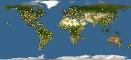
- Worldwide, except for Antarctic
- Checklists
|
|
|
Natural history |
"The oldest beetle fossils are from the Lower Permian (about 265 million years old; Ponomarenko, 1995); since then the group has diversified into many different forms. They range in size from minute featherwing beetles (Ptiliidae), adults of which are as small as 0.3 mm long, to the giant Goliath and Hercules beetles (Scarabaeidae), which can be well over 15 cm. While most species are phytophagous, many are predacious, or fungivores, or are parasitoids. They communicate to one another in many ways, either by use of chemicals (e.g. pheromones), sounds (e.g. stridulation), or by visual means (e.g. fireflies). They live in rainforest canopies, the driest deserts, in lakes, and above treeline on mountains."-- David R. Maddison, University of Arizona (David R. Madison, University of Arizona).
"Adephagans diverged from their sister group in the late Permian, with the most recent common ancestor of living adephagans probably existing in the early Triassic, around 240 million years ago (Ponomarenko, 1977; Erwin, 1979). Both aquatic and terrestrial representatives of the suborder appear in the fossil record in the late Triassic, with a Jurassic fauna consisting of trachypachid, carabid, gyrinid, and haliplid-like forms (Ponomarenko, 1977). The familial and tribal diversification of the group spans the Mesozoic period, with a few tribes radiating explosively in the Tertiary (e.g., members of the carabid subfamily Harpalinae, Erwin, 1985).
Adephagans are diverse in diet and structure. Most are general predators, although algal feeders (Haliplidae), seed feeders (many harpaline carabids), fungal feeders (rhysodines), specialist predators on snails (licinine and cychrine carabids), and ectoparasitoids of other insects (brachinine and lebiine carabids) or millipedes (peleciine carabids), occur. Many lineages have gone down, into caves, while others have gone up, into the rain forest canopy or alpine habitats. The body forms of some have become highly modified structurally for life in unusual habitats (e.g., gyrinids at the air-water interface, paussine carabids in ants' nests, rhysodines in heartwood). Some are ovoviparous (pseudomorphine carabids, Liebherr and Kavanaugh, 1985). A variety of chemical defense mechanisms have evolved in the group, including the explosive discharge of bombardier beetles (Aneschansley et al., 1969)."-- David R. Maddison, University of Arizona (1)
|
|
|
Links to other sites | |
|
|
|
References |
- Aneschansley, D. J., T. Eisner, J.M. Widom, and B. Widom. 1969. Biochemistry at 100°C: explosive secretory discharge of bombardier beetles (Brachinus). Science 165: 61-63.
- Arnold'di, L.V., V.V. Zherikhin, L.M. Nikritin, and A.G. Ponomarenko (eds.). 1977. Mezozoiskie Zhestkokrylye. Akademiya Nauk SSSR, Trudy Paleontologicheskogo Instituta, Vol. 161. Nauka Publishers, Moscow.
- Erwin, T. L. 1979. Thoughts on the evolutionary history of ground beetles: hypotheses generated from comparative faunal analyses of lowland forest sites in temperate and tropical regions. In T. L. Erwin, G. E. Ball, D. R. Whitehead and A. L. Halpern (ed.), Carabid Beetles: Their Evolution, Natural History, and Classification. The Hague, Dr. W. Junk bv. pp. 539-592.
- Erwin, T. L. 1985. The taxon pulse: A general pattern of lineage radiation and extinction among carabid beetles. In G. E. Ball (ed.), Taxonomy, Phylogeny and Zoogeography of Beetles and Ants. A volume dedicated to the Memory of Philip Jackson Darlingon, Jr. (1904-1983). Dordrecht, Dr W. Junk. 437-472.
- Liebherr, J. K. and D. H. Kavanaugh. 1985. Ovoviviparity in carabid beetles of the genus Pseudomorpha (Insecta: Coleoptera). Journal of Natural History 19(6): 1079-1086.
|
|
|
Acknowledgements | |
John Pickering University of Georgia, Athens.
I thank Sabina Gupta, Denise Lim, and Cassie Lloyd, University of Georgia, Athens, for technical and web support in developing this page.
|
|
| Supported by | |
|
Following modified from Insect Collection, University of Guelph
|
Top | See original
| &pull 20q v5.145 20180528: Error 301 Moved Permanently http://www.uoguelph.ca/debu/STEVEweb/html/Coleoptera.htm |
ERROR -- Need to remove recursive link: http://www.discoverlife.org/nh/id/lucid/Insect_orders/html/Coleoptera.html Lucid via Discover Life
Updated: 2024-04-25 17:39:24 gmt
|