| ||||||
Hypoponera opaciceps (Mayr, 1887)Ponera opaciceps |
|---|
| Links |
We parsed the following live from the Web into this page. Such content is managed by its original site and not cached on Discover Life. Please send feedback and corrections directly to the source. See original regarding copyrights and terms of use. |
|
80x5 -
240x3 -
240x4 -
320x1 -
320x2 -
320x3 -
640x1 -
640x2 Set display option above. Click on images to enlarge. | |
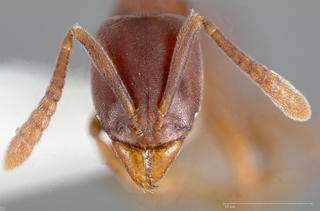
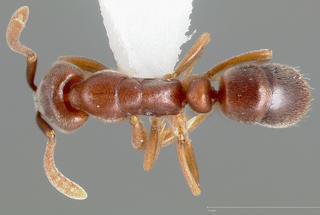
![]() © Brian Fisher, AntWeb, California Academy of Sciences, 2004 Hypoponera opaciceps, top, CASENT0005435 |
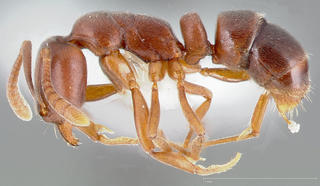
![]() © Brian Fisher, AntWeb, California Academy of Sciences, 2004 Hypoponera opaciceps, side, CASENT0005435 |
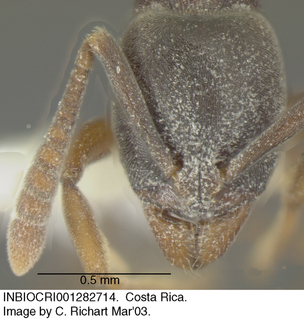
![]() © Brian Fisher, AntWeb, California Academy of Sciences, 2004 Hypoponera opaciceps, head, CASENT0005435 |
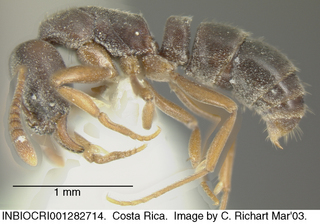
![]() © Jack Longino, Evergreen State College, 2004 Hypoponera opaciceps, side |
![]() © Jack Longino, Evergreen State College, 2004 Hypoponera opaciceps, head |
|
| Names | |
| |
| References | |
| Taylor, R.W. 1967. A monographic revision of the ant genus Ponera Latreille. Pacific Insects Monograph 13 | |
| Following modified from Evergreen State College |
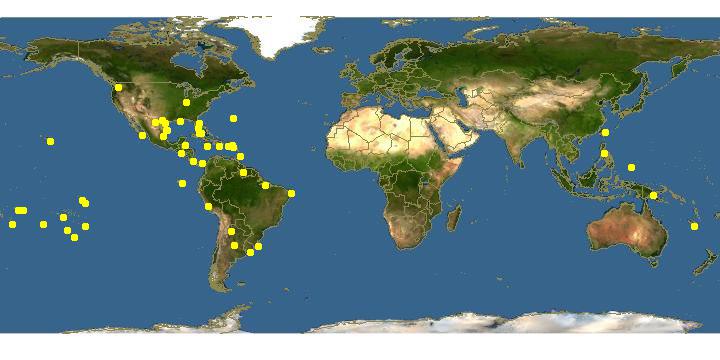
http://www.evergreen.edu/ants/genera/hypoponera/SPECIES/opaciceps/opaciceps.html ---> http://academic.evergreen.edu/projects/ants/genera/hypoponera/SPECIES/opaciceps/opaciceps.htmlHypoponera opaciceps (Mayr 1887)Formicidae, Hymenoptera, Insecta, Arthropoda, Animalia Range Throughout tropical Americas from southern USA to Argentina, and most of the Caribbean islands; also known from southeast Asia and Polynesia, probably as an introduced tramp species from the New World. Costa Rica: bare slopes of Volcan Arenal, Monteverde. Identification Eye circular, composed of approximately 5 fused facets; in full face view eyes small enough to not break lateral outline of head; puncta on face dense, closely spaced, face subopaque; petiolar node distinctly quadrate, which distinguishes it from any other species in Costa Rica; color very dark red brown to nearly black. Measurement data . Natural History This is a tramp species, typically found in open and highly disturbed areas. I have only collected it once in Costa Rica, but this probably reflects my collecting bias for mature forest habitats. It could be relatively common in open areas. My one observation was from a weathered but still largely bare lava flow on the slopes of Volcan Arenal, near the Arenal Observatory Lodge. I flipped about 100 stones in an area about 50m from the forest edge. The exposed stones were 10-50cm across, embedded in a sandy soil. The rocks were covered with a thin coating of lichens; otherwise the surface was bare. The only ants I found were nests of opaciceps , but they were relatively frequent, under about 10 of the rocks. Stefan Cover collected two nests in Monteverde. They were along the road to Penas Blancas, 1/4 mile below the Ventana in the Monteverde Cloud Forest Reserve. They were shallow nests in clay soil at the roadside. One nest series contained a yellow ergatoid male with 13 antennal segments. Type Data Ponera opaciceps Mayr 1887:536. Lectotype worker: Brazil, Santa Catarina. Lectotype designated and species redescribed by Kempf (1962). Literature Cited Kempf, W. W. 1962. Miscellaneous studies on neotropical ants. II. (Hymenoptera, Formicidae). Studia Entomol. 5:1-38. Mayr, G. 1887. Sudamerikanische Formiciden. Verhandlungen der zoologische-botanische Gesellschaft Wien 37:511-632. Page author: John T. Longino, The Evergreen State College, Olympia WA 98505 USA. longinoj@evergreen.edu Date of this version: 25 September 1999 Previous versions of this page: 28 May 1999 |
| Following served from Evergreen.edu |

| Following modified from Taiwan Biodiversity National Information Network |
| |||||||||||||||||||||||||||||||||||||||
| Following modified from CalPhotos |
| |||||||||||
| Discover Life | Top |
| © Designed by The Polistes Corporation |