| ||||||
Juniperus virginiana L.Virginia juniper; Red cedar; Eastern red cedar; Southern redcedar; Eastern redcedar; Juniperus barbadensis C Mohr non L; Juniperus lucayana auct non Britton; Juniperus silicicola Small LH Bailey; Sabina silicicola Small; Sabina virginiana L Antoine; Juniperus silicicola |
|---|
| Links |
We parsed the following live from the Web into this page. Such content is managed by its original site and not cached on Discover Life. Please send feedback and corrections directly to the source. See original regarding copyrights and terms of use. |
| Names | |
| |
| Following modified from The Gymnosperm Database |
| &pull 20q v4.662 20091102: Error 500 Can't connect to conifers.org:80 (connect: timeout) http://conifers.org/cu/ju/virginiana.htm |
| Following modified from Global Invasive Species Team, The Nature Conservancy |
Juniperus virginianaFrom Bugwoodwiki
(Redirected from
Juniperus virginiana/
)
Jump to:
navigation
,
search
Authors: Carmen K. Converse, Global Invasive Species Team, The Nature Conservancy
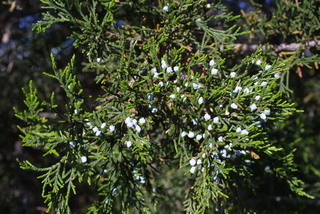
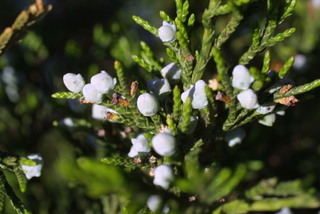
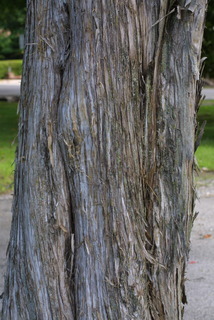
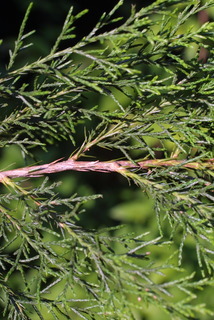
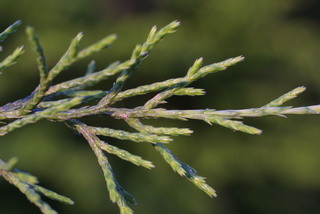
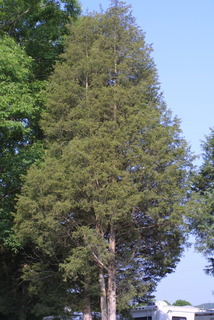
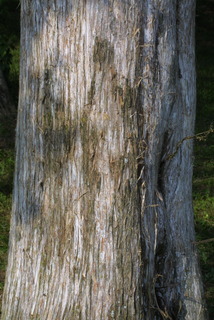
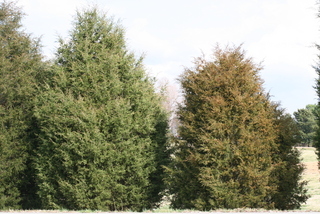
IDENTIFIERSLatin Name: Juniperus virginiana Common Name: eastern cedar, red cedar General Description:Eastern red cedar is an evergreen tree' native to eastern North America. Grown as an ornamental tree, and to a small extent for Christmas trees, it grows 5-20 m tall and up to 30 m in height. It has typically an ovoid or pyramidal crown. J. virginiana var. crebra Fern. and Grisc. has a more columnar shape (Fassett 1943). The red bark is thin (0.32 to 0.64 cm. thick) and exfoliates in long strips (Collingwood 1938). Leaves of seedlings and juvenile growth are acicular; adult plants have entire, opposite scale like leaves that are tightly appressed and overlapping. The scale like leaves have an oval dorsal gland. The species is dioecous (Van Haverbeke and Read 1976). The blue black, often glaucous fruit is a fleshy berry like cone. Each fruit usually contains one to two seeds (Van Haverbeke and Read 1976). For further description see Rosendahl 1970, Fernald 1950. NATURAL HISTORYRangeJ. virginiana grows in the eastern United States and adjacent Canada from Ontario to South Dakota, Nebraska, Kansas, eastern Texas, to north Florida, and north to Nova Scotia (Van Haverbeke and Read 1976). J. virginiana is very susceptible to fire destruction (Mohr 1901, Bray 1960, Arend 1950, Harper 1912, Collingwood 1938). It is a problem because it has rapidly invaded some grasslands and savannas mostly due to fire suppression (Beilmann and Brenner 1951, Arend 1950). In areas that once burned periodically, eastern red cedar was protected from fire on dry or rocky sites lacking sufficient herbaceous fuel to carry a fire (Martin and Crosby 1955, Arend 1950). As fire frequency decreased, eastern red cedar invaded adjacent, and apparently stable plant communities (Ormsbee et al. 1976). Subsequently, individual eastern red cedars have increased in size and coverage, and stand density has increased. Large trees and dense stands shade or otherwise inhibit growth of desired herbaceous vegetation (McBain 1983). J. virginiana is most competitive on exposed dry sites. Plentiful habitat is provided by disturbed areas including abandoned pastures (Lutz 1928) and cultivated fields (Beilmann and Brenner 1951, Mohr 1901, Bard 1952, Ormsbee et al. 1976), eroded areas (Steyermark 1940, Quarterman 1950b) and open woods thinned by timber harvest. One result of this invasion is increased seed sources. Rapid primary invasion and establishment may be followed by secondary invasion within six or seven years (Owensby et al. 1973). Rate of invasion and increases in stand density were examined on grazed pastures in Kansas. On heavily invaded pastures, Owensby et al. (1973 found a sigmoid population increase in nine years. In the nine years, cumulative numbers of plants on the heavily invaded pasture increased from about eight per acre (about 3/ha.) to about 180 per acre (about 73/ha). HabitatSome natural habitats topographically and edaphically protected from fire include sandy loam covered bluffs; rocky hillsides (Wheeler 1900, Collingwood 1938); shale barrens of Virginia and W. Virginia; limestone glades of Tennessee, Virginia, Missouri and Arkansas (Erickson et al 1942); serpentine barrens of Pennsylvania and Maryland (Harper 1926); sandstone cliffs; granite outcrops; sand dunes; and estuarine swamps (Harper 1912). It is adapted to a wide range of environmental conditions. Annual precipitation ranges from 40.64 cm. in the Great Plains to 152.40 cm. in the southeast United States. Temperature extremes range from 40° C to 46° C. Elevations range from 1524 m. to sea level (Van Haverbeke and Read 1976). Eastern red cedar thrives in well drained alluvial soils but also tolerates shallow limestone and sandstone soils and pH ranging from 4.7 to 7.8 (Arend 1950). It is able to grow where water is near the surface (Harper 1912) or where soil moisture fluctuates from near saturation in the winter to extreme dryness in the summer (Erickson et al. 1942). It is very drought tolerant (Pool 1939, Hinckley et al. 1979, Stiles and Melchers 1935). Exposure varies from north facing slopes of the plains (Albertson 1940), to south and west facing hillsides (Erickson et al. 1942) and near level glades (Quarterman 1950a) and coastal plains (Harper 1912). It is less vigorous in the shade of other trees, but can grow in the understory of deciduous species (Parker 1951) such as oaks and hickories of the Georgia Alabama coastal plain (Harper 1912, Mohr 1901) or cottonwoods of Great Plains riverbottoms (Van Haverbeke and Read 1976). It also may form pure stands (Mohr 1901). J. virginiana is cultivated for shelterbelts and windbreaks, timber, ornamentals, cedar oil and associated uses (Van Haverbeke and Read 1976). EcologyEastern red cedar grows slowly and can live as long as 300 years (Collingwood 1938). Plant size and growth depend mostly on soil depth and moisture availability. On well drained alluvial and upland soils greater than 24 inches (60.96 cm.) in depth, average height is 45 feet (13.72 m.) after 50 years (Arend 1950). On soils less than twelve inches (30.48 cm.) deep, it rarely exceeds 20 (6.10 m.) to 30 feet (9.14 m.) in height (Arend 1950) and diameter growth is less than on deeper soils (Arend and Collins 1948). In the prairie region trees less than 20 feet (6.10 m.) tall may be 110 years old (Fowells 1965). Growth activity is more related to moisture availability than other physiological or phenological reasons. Cambial activity increases when water is available. On rangeland, Owensby et al. (1973) found that the ground level diameter of young red cedar increased 0.27 inches (.69 cm.) and height increased 7.85 inches (19.94 cm.) for each year of growth. The range of some plant heights was as follows: six year old 24 64 in. (0.60 m.-1.63 m.), seven year old 29 75 in. (0.74-1.91 m.), and ten year old 79 90 in. (2.01-2.29 m.) (Owensby et al. 1973). Those heights are of potentially sexually mature plants in the Great Plains, and have implications for fire management. Eastern red cedar grows better than some other species in open areas having full sunlight, low soil moisture, and occasional drought. It is least competitive in shade. In a southern Illinois study, optimal photosynthetic rates occurred in full sunlight at temperatures between 20-25° C in the summer and 15-20° in the winter. Photosynthesis continued at low soil moistures and high temperatures, and at temperatures as low as 0° C (Ormsbee et al. 1976). The tightly packed branches especially of mature plants help to maintain warmer temperatures in internal foliage during the winter (Ormsbee et al. 1976) and reduce dessication to maximize winter photosynthesis. In grasslands herbaceous vegetation protects red cedar seedlings from winter cooling. J. virginiana is more drought tolerant than associated deciduous woody species in open areas because it is able to rapidly produce taproots (Ormsbee et al. 1976) and has an extensive fibrous root system. It also conserves moisture by stomatal closure as an early drought response, and has finely dissected leaves providing cooling during stomatal closure (Hinckley et al. 1979). In addition to eastern red cedar's evergreen growth and efficient and opportunistic moisture use, it also affects the soil and groundcover beneath its canopy. It shades desirable herbaceous species (McBain 1983, Gehring 1983), alters species composition (Gehring 1983) and raises surface soil pH (McBain 1983, Coile 1933, Spurr 1940). In Nebraska, Gehring (1983) found that groundcover of Poa pratensis L. and Carex spp. increased relative to increases in J. virginiana size. Coverage of prairie species beneath eastern red cedar decreased as tree size increased. McBain (1983) also found that tree canopy suppressed prairie species, and that soil moisture was reduced beneath trees. Toxic substances produced in junipers may inhibit germination of some grass species. In tests of J. osteosperma (Torr.) Little, foliar extracts inhibited germination of Bouteloua gracilis HBK Lag. ex. Steud., B. curtipendula (Michx.) Torr and Agropyron desertorum (Fisch. ex. Link.) Schult. (Lavin et al 1968). ReproductionThere is no natural asexual reproduction in red cedar. It does not resprout after complete cutting or burning (Arend 1950). Sexual maturity is reached in six (Owensby et al. 1973) to ten years (Van Haverbek and Read 1976). Staminate conelets have been observed on trees four to five years old, but similar information on ovulate conelet development is unavailable (Van Haverbeke and Read 1976). Staminate and ovulate conelets form on scale like foliage in September in North Carolina, but development is not complete until the next spring (Van Haverbeke and Read 1976). Hybridization:J. virginiana exhibits variation in form, foliage color, vigor, height growth and disease resistance. Some of this variability results from hybridization with other junipers including J. ashei Buchholz in the Ozarks, J. scopulorum Sarg. in the Great Plains, J. silicicola (Small) Bailey in Florida, and J. horizontalis Moench. in the northern extent of red cedar's distribution (Van Haverbeke and Read 1976). Pollination:Pollen is wind dispersed from mid February to mid May depending on the location (Van Haverbeke and Read 1976). Fertilization is complete usually in June, and the embryo is mature in late July to mid November (Van Haverbeke and Read 1976). Seed Production:Good seed crops are produced every two or three years with light crops in the intervening years. The best seed bearing age is between 25 and 75 years, although some trees will bear seeds at 10 years and some as late as 175 years (Fowells 1965). Seeds mature in autumn and are sometimes retained on the tree until the following spring (Phillip 1910). Dispersal:Most seeds are dispersed by birds, including cedar waxwings, thrushes, starlings, robins, kingbirds, downy woodpeckers, and mockingbirds (Phillips 1910). Some seeds drop to the ground to germinate beneath mother trees, or are dispersed by small mammals (Parker 1951). Seedling density is greater near trees or along fencelines that provide perching sites, than in open sites (Phillips 1910, Martin and Crosby 1955). However, seedlings of other juniper species have been observed in open areas at long distances from these preferred perching sites (Burkhardt 1969). Germination:"Most of the natural germination of eastern red cedar seed occurs in the early spring the second year after dispersal. A few seeds may germinate the first and third year. Delayed germination is caused by embryo dormancy and possibly by an impermeable seedcoat." (Folwells 1965) There is considerable variation in stratification and scarification requirements probably due to the wide range and many genotypes of the species (Van Haverbeke and Read 1976). These requirements for propagation can be found in Seeds of Woody Plants in the United States (1974) "On very dry sites most seedlings are found on protected places such as crevices or between layers of limestone where the microclimate is more favorable to germination (Albertson 1940)." (Fowells 1965) Seedlings usually establish more readily on mineral soil than where a litter layer is present (Parker 1952, Lutz 1928), but are capable of establishment in thick sod (Lutz 1928, Steuter 1984). In pastures, a critical amount of mulch may influence establishment; too much or too little prevents germination (Owensby et al. 1973). Seedling Development:"Eastern red cedar seedlings withstand drought rather well because of their deep, penetrating taproot and relatively small leaf surface. During the first year seedlings do not produce much top growth, but they produce a long fibrous root system. Seedlings will often survive on arid sites, but their growth is slow. The species is rather shade intolerant in the seedling stage. In the southern Piedmont area, red cedar seedlings under open canopy stands survived better than under closed canopy stands (Parker 1952). A study indicated that the height growth responses of 1-0 seedlings (one year old, not transplanted) in full sunlight were the same. Seedling growth was stunted when grown in one tenth sunlight (McDermott and Fletcher 1955). It is more sensitive to flooding than loblolly pine (Parker 1950)." (Fowells 1965) Mice, rabbits, livestock (Albertson 1940) and deer (Van Duesen 1979) may damage seedlings. Increased stocking rates of cattle on Kansas pastures generally decrease red cedar invasion. In one study, invasion decreased especially when cattle grazed during May through October (Owensby et al. 1973). Seedling survival is usually high following transplanting (Arend 1945, Munns and Stoeckler 1946). MANAGEMENT/MONITORINGManagement Requirements:Established juniper plants compete directly with grassland species for moisture and nutrients (Wink and Wright 1972, Allred 1949). Eastern red cedar is potentially a problem because of the following reasons:
Active management is required to reduce populations, and to prevent invasion by maintaining vigor of grassland species. Burning:The effectiveness of burning to control eastern red cedar is related to tree height, crown density, stand density, amount of herbaceous fuel and fire weather conditions. Spring burns (March through May) usually kill trees up to about one meter tall (Kucera et al. 1963, Buehring 1971, Martin and Crosby 1955). Larger trees up to 20 feet (6.1 m.) occasionally are killed in some fires (Ownesby et al. 1973), or under drier, windier, and less humid conditions. In a Missouri burn in April, Kucera et al. (1963) found that 93% of all red cedar were killed; the largest tree killed was 10 feet (3.05 m.) tall. Air temperature was 63° F (17.2° C) and humidity was 21%. After another 'cooler' burn on March 31, at 53° F (11.7° C) and 43% humidity, crowns of larger plants (1.52 to 8.89 cm. in diameter at 15.24 cm. above ground) remained green (Kucera et al.1963). In Oklahoma, Dalrymple (1969) found complete control of J. ashei seedlings less than 2 feet (0.61 m.), 77% mortality of trees 2 6 feet (0.61 1.83 m.) and 27% mortality of trees greater than 6 feet (1.8 m.) (cited in Wink and Wright 1973). In a Missouri burn, large tree mortality depended on amount of herbaceous fuel and density of crowns. Trees having crowns with sparse foliage exhibited 90% mortality. Trees having larger crowns with dense foliage showed 35% mortality. Light crowned trees had more foliage beneath them than did densely crowned trees. Temperatures the day of the burn ranged from 28-60° F ( 2.2 to 15.5° C), the lowest relative humidity was 26%, and winds averaged 4.7 mph (7.6 kms.per hour) (Martin and Crosby 1955). For control of large trees, herbaceous fuel levels must be adequate to carry a fire. When burning large red cedar, Launchbaugh and Owensby (1978) allow for 3,3.71-4,494 kg/ha of herbaceous fuel. A 30 to 61 meter firelane is burned out when grasses are moist. After that burn is extinguished, a headfire is set when winds are about 24 km/hour and relative humidity is about 40% (Wright and Bailey 1980). Sometimes fire will not easily carry through dense stands of red cedar, requiring additional controls such as dozing or windrowing. In Texas, a 250 ha. area of dense J. ashei was burned by a crown fire started by igniting windrows of dried juniper adjacent to the area to be burned (Bryant et al. 1983). The authors determined from this study that such areas would optimally burn when wind speeds exceed 16 km/hr, canopy cover is greater than 35%, relative humidity is between 20-40 %, air temperature is 2 to 32° C and leaf moisture is below 60% (Bryant et al. 1983). Volatile fuels found in J. virginiana are explosive and can produce firebrands. Firebrands during a moist spring burn of J. ashei created spot fires 60 to 90 feet (18.3 to 27.4 m.) from piles of junipers. Under extremely dry conditions (81° F, 14% relative humidity, 10 to 15 mph winds = 27° C, 16.1 to 24.1 km/hr) spot fires occurred 800 to 1000 feet (243.8 m. to 304.8 m.) from the fire edge (Wright et al. 1972). Cutting/Mowing:A single cut close to the ground level that removes all green foliage usually will kill red cedar (Launchbaugh and Owensby 1978). In one study, plants cut having basal diameters between 0.25 inches (0.64 cm) and 0.75 inches (1.91 cm.) showed 20% resprouting sixteen months after cutting. No regrowth occurred on plants having basal diameter larger than 0.75 inches (1.91 cm). Plants having basal diameters of 0.5 inch (1.27 cm) to 1.25 inches (3.18 cm) mowed 6 inches above ground showed 22% resprouting sixteen months after mowing. This regrowth is attributed to the presence of buds within six inches of ground level (Buehring et al. 1971). Excavation:In Missouri J. virginiana seedlings were killed by handpulling (Toney 1983). Grubbing will kill individual plants (Scifres 1980). Chemical:Most herbicides are ineffective or erratic in control of red cedar (Johnson 1979). The best results from herbicidal control are as follows: 1. Tree injectionPicloram as a potassium salt injected into trees in winter, summer and spring (Oklahoma) at rates of 1 and 3 ml. per inch (2.54 cm.) dbh (diameter breast height) killed red cedar after 14 months (Buehring et al. 1971). In an Arkansas study, picloram in an aqueous solution (1:5) injected in June provided 83% kill by the following December (Voeller and Holt 1973). 2. Soil applicationApplication of 10% granular picloram in August (Oklahoma) at least 3 and 6 teaspoons per inch dbh provided 90% and 70% control respectively after 13 months (Buehring et al. 1971). In Kansas, fenuro, picloram, and karbutilate applied as granules to the soil in April at 1 to 2 tablespoons per inch basal diameter showed 70 to 100% control after 23 months (Owensby et al. 1973). 3. Foliar and stem spraysSprays giving greater than 80% kill on trees 2 to 4 feet (0.6 to 1.2 m.) tall and 7 to 8 feet (2.13 to 2.44 m.) high included paraquat at 1 and 2 lbs./acre (1.12 and 2.24 kgs./ha) + 0.5% suffactant; dicamba at 3 and 6 lb./A (3.36 and 6.72 kg./ha) and dicamba at 2 lbs./A (2.24 kgs./ha) + 2-4-5T ester at 4 lbs./A (4.48 kgs./ha); 2-4-D + dichloropropal at 4 lbs./A (4.48 kgs./ha) each or 8 lbs./A (8.96 kgs./ha) each; and AMS at 50 and 75 lb./100 gal. (.06 and .09 kg./l) spray (Buehring et al. - 1971 from Forestry Abstracts 24(6) 1973). 4. Basal applicationHexazinone applied as an undiluted liquid in July in Virginia at 4 and 8 ml./2 inches (5.08 cm.) of basal stem diameter killed red cedar trees having basal stem diameter less than one inch (2.54 cm.) to 7 inches (17.78 cm) (Link et al. 1979). Biological control:Leaf blight ( Cercospora sequoiae Ell. and Ev. var. juniperi ) has killed 15 to 20 year old eastern red cedar (Scifres 1980). INFORMATION SOURCESBibliographyAlbertson, F.W. 1940. Studies of native red cedar in west central Kansas. Trans. Kansas Acad. Sci. 43:85-96. Allred, B.W. 1949. Distribution and control of several woody plants in Texas and Oklahoma. J. Range Management 2:17-29. Arend, J.L. 1945. An early eastern red cedar plantation in Arkansas. J. Forestry 45:358-360. Arend, J.L. 1950. Influence of fire and soil in distribution of eastern red cedar in the Ozarks. J. Forestry 48:129-130. Arend, J.L.; Collins, R.F. 1948. A site classification for eastern red cedar in the Ozarks. Soil Sci. Soc. Amer. Proc. 13:510-511. Bard, G.E. 1952. Secondary succession on the Piedmont of New Jersey. Ecol. Monogr. 22:195-215. Beilmann, A.P.; Brenner, L.G. 1951. The recent intrusion of forests in the Ozarks. Missouri Botanical Gardens Ann. 38:261-282. Bray, Roger. 1960. The composition of savanna vegetation in Wisconsin Ecology 41(4):721-732. Bryant, F.C.; Launchbaugh, G.K.; Koerth, B.H. 1983. Controlling mature Ashe juniper in Texas with crown fires. J. Range Management 36(2):165-168. Buehring, N.; Santelmann, P.W.; Elwell, H.M. 1971. Responses of eastern red cedar to various control procedures. J. Range Management 24:378-38. Buehring, N.; Santlemann, P.W.; Elwell, H.M. 1973. Responses of eastern red cedar to various control procedures. Proc. 23rd Ann. Meeting So. Weed Sci. Soc. 1970. From Forestry Abstracts 34 (abstract no. 3467). Burkhardt, J.W. 1969. Nature and successional status of western juniper vegetation in Idaho. J. Range Management 22:264-270. Coile, T.S. 1933. Soil reaction and forest types in the Duke Forest. Ecology 14:323-333. Collingwood, G.H. 1938. Eastern red cedar, Juniperus virginiana L. Amer. Forests 44:30-31. Erickson, R.O.; Brenner,L.G.; Wraight, J. 1942. Dolomitic glades of east central Missouri. Missouri Botanical Gardens Ann. 29(2):89-101. Fassett, N.C. 1943. The validity of Juniperus virginiana var. crebra . American J. of Botany 30(7):469-477. Fernald, M.L. 1950. Gray's manual of botany. 8th ed. New York: D.Van Nostrand Co. 1632 p. Fowells, H.A.; compiler. 1965. Silvics of Forest Trees of the United States. U.S. Dept. Agric. Forest Service. Agriculture Handbook No. 271. 762 p. Gehring, J.L. 1983. Vegetational changes under isolated Juniperus virginiana in an eastern Nebraska bluestem prairie. Univ. Nebraska Omaha; Thesis. (from abstract). Harper, R.M. 1912. The diverse habitats of the eastern red cedar and their interpretation. Torreya 12(7):145-154. Harper, R.M. 1926. The cedar glades of middle Tennessee. Ecology 7(1) 48-54. Hinckley, T.M.; Dougherty, P.M.; Lassoie, J.P.; Roberts, J.E.; Teskey, R.O. 1979. A severe drought impact on tree growth, phenology, net photosynthetic rate and water relations. Amer. Midland Nat. 102(2):30-316. Johnsen, T.N. 1979. Herbicidal control of junipers. Proc. Western Soc Weed Sci. 32:79. Kucera, C.L.; Ehrenreich, J.H.; Brown, Carl. 1963. Some effects of fire on tree species in Missouri prairie. Iowa State J. Sci. 38(3):17-185. Launchbaugh, J.L.; Owensby, C.E. 1978. Kansas rangelands: their management based on a half century of research. Kansas Agric. Exp. Station Bull. 622. 56 p. Lavin, F.; Jameson, D.A.; Gomm, F.B. 1968. Juniper extract and deficient aeration effects on germination of six range species. J. Range Management 21:262 263. Link, M.L.; Chappell, W.E.; Hipkins, P.L.; Coartney, J.S. 1979. Control of eastern red cedar. Proc. Southern Weed Sci. Soc. 32:238-24. Lutz, H.J. 1928. Trends and silvicultural significance of upland forest successions in southern New England. Yale Univ. School Forestry Bull. 22:1-68. McBain, D.K. 1983. Influence of eastern red cedar ( Juniperus virginiana L.) on soil properties and vegetative composition of a sand prairie in southwestern Wisconsin. Thesis. (from abstract). McDermott, R.E.; Fletcher, P.W. 1955. Influence of light and nutrition on color and growth of red cedar seedlings. Missouri Agric. Experimental Station Research Bull 587. 15 p. Martin, S.C.; Crosby, J.S. 1955. Burning and grazing on glade range in Missouri. U.S. Department Agric. Central States Forest Experimental Station Technical Paper 147. (13 p.). Mohr, C. 1901. Notes on the red cedar. U.S. Department Agric. Division of Forestry. Gov. Printing Office Bull. 31. Munns, E.N.; Stoeckeler, J.H. 1946. How are the Great Plains shelter belts? J. Forestry 44(4):237-257. Ormsbee, P.; Bazzaz, F.A.; Boggess,W.R. 1976. Physiological ecology of Juniperus virginiana in old fields. Oecologia (Berl.) 23:75-82. Owensby,C.E.; Blan, K.R.; Eaton, B.J.; Russ, O.G. 1973. Evaluation of eastern red cedar infestations in the northern Kansas Flint Hills. J. Range management 26(4):256-260. Parker, J. 1950. The effect of flooding on the transpiration and survival of some southeastern forest tree species. Plant Physiol. 25:453-460. Parker, J. 1951. Natural reproduction from red cedar. J. Forestry 49:285. Parker, J. 1952. Establishment of eastern red cedar by direct seeding. J. Forestry 50:914-917. Phillips, F.J. 1910. The dissemination of junipers by birds. Forestry Quarterly 8:60-73. Pool, R.G. 1939. Some reactions of the vegetation in the towns and cities of Nebraska to the great drought. Bull. Torrey Bot. Club 66(7):457-464. Quarterman, Elsie. 1950a. Ecology of cedar glades. I. Distribution of glade flora in Tennessee. Bull. Torrey Bot. Club. 77(1) 1-9. Quarterman, Elsie. 1950b. Tennessee cedar glade plant communities. Ecology 31:234-254. Rosendahl, C.O. 1955. Trees and shrubs of the upper Midwest. Minneapolis,MN.: Univ. Minnesota Press. 411 p. Scifres, C.J. 1980. Brush Management. College Station, TX.: Texas A&M Univ. Press. 360 p. Spurr, S.H. 1940. The influence of two Juniperus species on soil reaction. Soil Sci. 50(4):289-294. Steuter, Allen. 1984 Jan. 30. Preserve manager. Telephone to C.K. Converse, The Nature Conservancy Regional Office, Minneapolis, MN. Steyermark, J.A. 1940. Studies of the vegetation of Missouri I. Botanical Series Field Museum Natural History 9(5):347-475. Stiles, E.H.; Melchers, L.E. 1935. The drought of 1934 and its effects on trees in Kansas. Kansas Acad. Sci. Trans. 38:107-127. Toney, Thomas E. 1983 Nov. 29. Prairie biologist, Missouri Dpt. Conservation. Telephone to C.K. Converse, The Nature Conservancy Regional Office, Minneapolis, MN. U.S. Department of Agric., Forest Service. 1974. Seeds of woody plants in the United States. U.S. Dept. Agric. Handbook 450. 883 p. Van Deusen, J.L. 1979. Eastern red cedar seed sources recommended for North Dakota sites. U.S. Dpt. Agric., Forest Service. Rocky Mountain For. and Exp. Station Research Note RM 371:1-5. Van Haverbeke, D.F.; Read, R.A. 1976. Genetics of eastern red cedar. U.S. Dept. Agric., Forest Service Research Paper WO 32. Voeller, J.E.; Holt,H.A. 1973. Continued evaluation of the hypohachet for woody species control. Proc. 26th Ann. Meeting Southern Weed Sci. Soc. 354-360. Wheeler, W.A. 1900. A contribution to the knowledge of the flora of southeastern Minnesota. Minnesota Botanical Studies. 2nd series, part IV. 353-416. Wink, R.L.; Wright, H.A. 1973 Effects of fire on an Ashe juniper community. J. Range Management 26(5):326-329. Wright, H.A.; Bailey, A.W. 1980. Fire ecology and prescribed burning in the great plains a research review. U.S. Dpt. Agric., Forest Service General Technical Report. INT 77. Wright, H.A.; Britton, C.M.; Wink, R.L.; Beckham, Bob. 1972. A progress report on techniques to burn dozed juniper. Proc. Tall Timbers Fire Ecol. Conf. 12:169-174. Original DocumentElement Stewardship Abstract; Carmen K. Converse, 1983.
Retrieved from "
http://wiki.bugwood.org/Juniperus_virginiana
"
ViewsPersonal toolsProjectsParticipationBugwood Image SitesExport Current Page
|
| Following modified from US Forest Service |
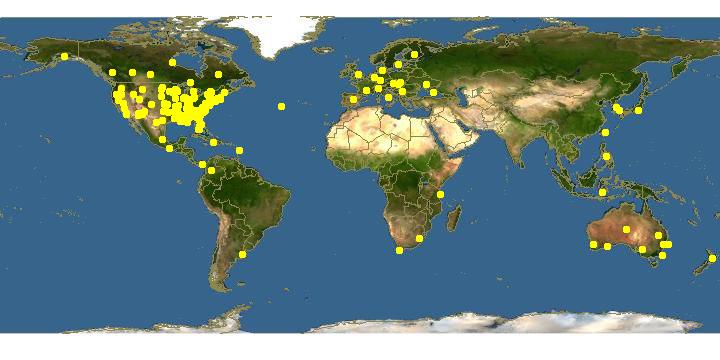
Juniperus virginiana L. Eastern Redcedar Cupressaceae -- Cypress family Edwin R. Lawson Eastern redcedar (Juniperus virginiana), also called red juniper or savin, is a common coniferous species growing on a variety of sites throughout the eastern half of the United States. Although eastern redcedar is generally not considered to be an important commercial species, its wood is highly valued because of its beauty, durability, and workability. The number of trees and volume of eastern redcedar are increasing throughout most of its range. It provides cedarwood oil for fragrance compounds, food and shelter for wildlife, and protective vegetation for fragile soils. HabitatNative RangeEastern redcedar is the most widely distributed conifer of tree size in the Eastern United States and is found in every State east of the 100th meridian. The species extends northward into southern Ontario and the southern tip of Quebec (27). The range of eastern redcedar has been considerably extended, especially in the Great Plains, by natural regeneration from planted trees (47).
ClimateThe wide natural distribution of eastern redcedar clearly indicates its ability to grow under varying and extreme climatic conditions. Average annual precipitation varies from about 380 mm (15 in) in the northwestern section to 1520 mm (60 in) in the southern parts of its range (40). Throughout the eastern redcedar range, average precipitation from April through September measures from 380 mm (15 in) to 760 mm (30 in). This suggests that summer precipitation may be more limiting to the species than average annual precipitation. Average annual snowfall ranges from a trace to more than 254 cm (100 in). Average annual temperatures vary from about 4° C (40° F) in the north to 20° C (68° F) in the southern part of the botanical range. Average annual maximum temperature ranges only from about 32° C (90° F) to 41° C (105° F), but average minimum temperature ranges from -43° C (-45° F) to -7° C (20° F). The growing season varies from about 120 to 250 days. Soils and TopographyEastern redcedar grows on a wide variety of soils, ranging from dry rock outcrops to wet swampy land (15). The most common soils fall within the soil orders Mollisols and Ultisols. No attempt will be made here to describe all of them. Like most species, eastern redcedar grows best on deep, moist, well-drained alluvial sites, where its height may reach 17 to 18 m (55 to 60 ft) in 50 years. On the better sites, however, hardwood competition is so severe that the species rarely becomes dominant. Eastern redcedar also grows well on deep, upland soils, particularly abandoned farmland. A 0.4-hectare (1-acre) plantation established in Arkansas from wildlings, with spacing of 1.8 by 1.8 m (6 by 6 ft), yielded a basal area of 37.4 m²/ha (163 ft²/acre) and an estimated 196 m³/ha (2,800 ft³/acre) of merchantable volume in 44 years (11). The species is frequently associated with areas commonly called glades, characterized by thin rocky soils and intermittent rock outcrops; soil depth is difficult to determine because soil rock content and depth of rock fissures vary (11,16). Soils on the poorest glade sites are less than 30 cm (12 in) deep, medium sites are usually less than 61 cm (24 in) deep and have large crevices, and good sites have deeper soil. Arend and Collins (3) developed the site classification system shown in table 1.
Eastern redcedar grows on soils that vary widely in acidity. Soils found in natural stands range in pH value from 4.7 to 7.8. Although the species will grow on sites that are slightly alkaline, it is not particularly tolerant to higher pH levels. Eastern redcedar is, in fact, among the least alkali-tolerant of drought-hardy trees and shrubs. Soils in eastern redcedar stands tend to become neutral or slightly alkaline because the high calcium content of the tree's foliage can change the pH of the surface soil in a relatively short time. This condition also increases earthworm activity, with an increase in incorporation of organic matter, a lower volume weight, and an increase in pore volume and infiltration rate (11,15). Eastern redcedar grows on ridgetops, varying slopes, and flat land and is frequently found on dry, exposed sites and abandoned fields. This aspect also influences eastern redcedar development. In the western part of its range, the species may be found on north-facing slopes and along streambanks where there is some protection from high temperatures and drought. Although the most desirable elevation is not clearly delineated, eastern redcedar is found most often growing between 30 m (100 ft) and 1070 m (3,500 ft). It is notably absent below the 30 m (100 ft) elevation zone in the southern and eastern parts of the species range (15,27). Associated Forest CoverPure stands of eastern redcedar are scattered throughout the primary range of the species. Most of these stands are on abandoned farm lands or drier upland sites. The forest cover type Eastern Redcedar (Society of American Foresters Type 46) is widespread and therefore has many associates (10). Variants of the type are eastern redcedar-pine, eastern redcedar-hardwood, and eastern redcedar-pine-hardwood. The eastern redcedar-pine variant is composed of eastern redcedar and either shortleaf pine (Pinus echinata) or Virginia pine (P. virginiana) and is found throughout the southern half of its range. The eastern redcedar-hardwood variant is found throughout the central part of its range and includes a mixture of red (Quercus rubra) and white (Q. alba) oaks, hickories (Carya spp.), black walnut (Juglans nigra), and other hardwoods. The third variant, eastern redcedar-pine-hardwood, includes all of the above species associations (15). Eastern redcedar appears as a minor component of several other forest cover types. Eastern redcedar is among the first to invade abandoned fields and areas cleared for pasture (25). On deeper soils, persimmon (Diospyros virginiana) and sassafras (Sassafras albidum) are associated invaders and may crowd it out. In cedar glades, the species is commonly associated with blackjack oak (Quercus marilandica), winged elm (Ulmus alata), fragrant sumac (Rhus aromatica), Carolina buckthorn (Rhamnus caroliniana), rusty blackhaw (Viburnum rufidulum), and Alabama supplejack (Berchemia scandens). Little bluestem (Andropogon scoparius), big bluestem (A. gerardi), yellow Indiangrass (Sorghastrum nutans), switchgrass (Panicum virgatum), dropseed (Sporobolus spp.), and numerous composites and legumes are common herbaceous plants. Life HistoryReproduction and Early GrowthFlowering and Fruiting- Eastern redcedar is a dioecious species, and trees probably reach sexual maturity at about 10 years. Staminate strobili or conelets begin to develop on male trees at the tips of axillary branches of new scale-leaves. Pollen grains are formed by late September in conelets having 10 to 12 entire-margined sporophylls. Staminate strobili turn a conspicuous yellowish brown when they reach maturity during winter, and thus male trees are readily distinguished from ovulate ones. Small green conelets begin to develop by early fall or late summer on ovulate trees but grow very little during the winter. They are borne terminally on axillary branches of the new scale-leaves but do not become conspicuous until late February to early spring. At this time the microsporangial walls of the staminate conelets split longitudinally, discharging the mature pollen. Pollen grains lodge at the end of the micropyle of the many ovules in the conelet. Pollination is complete in a few days when the conelet closes. Growth of the pollen tube is slow at first but becomes active by late May or mid-June. Fertilization occurs in June and the mature embryo is full grown in about 2 months, anytime from late July to mid-November, depending on location. As the ovulate cone develops, greenish fruit-scales form the outer fleshy protective coat of the berrylike cone. Cones change color from green to greenish white to whitish blue and finally to bluish as the season progresses. Each cone or fruit contains one to four (occasionally more) rounded or angled brownish seeds, 2 to 4 mm (0.08 to 0.16 in) long, often with longitudinal pits. The seed coat has a thick and bony outer layer and a thin, membranous inner layer (23,47). Seed Production and Dissemination- Mature eastern redcedar trees produce some seeds nearly every year, but good crops occur only every 2 or 3 years. The cones do not open and will remain on the tree through the winter, although many are eaten and dispersed by animals. Most remaining cones are dispersed in February to March. Mature fruits are usually collected in the fall by hand-stripping or shaking onto canvas. Seeds may be stored as dried fruits or cleaned seeds. After fanning to remove leaves, twigs, and other debris, the seeds can be extracted by running the fruit through a macerator and floating the pulp and empty seeds away. Dried fruits should be soaked in water several hours before macerating. Since eastern redcedar fruits are resinous, they should be soaked in a weak lye solution for 1 or 2 days. The soaking helps separate the oily, resinous pulp from the seeds and aids further washing, flotation, and stratification. This treatment should be followed by thorough washing (45). The cleaned seeds are ready for use, or they can be dried to 10 to 12 percent moisture content for storage at -7° C (20° F) to 4° C (40° F). The number of cleaned seeds per kilogram ranges from 81,570 (37,000/lb) to 121,250 (55,000/lb) and averages 96,120 (43,600/lb) (23). If seeds are to be sown in the spring, they should be soaked in a citric acid solution (10,000 ppm) for 96-hours, placed in moist-warm stratification at 24° C (75° F) for 6 weeks, and finally placed in moist-cool stratification at 5° C (41° F) for 10 weeks. Germination is best if fresh seeds are used. If desired, dry, stored seeds may be sown in mid-July, which accomplishes moist-warm stratification, and the over-winter period accomplishes moist-cool stratification for early spring germination (46). In nursery practice, eastern redcedar seeds are broadcast or sown in rows spaced 15 to 20 cm (6 to 8 in) apart in well-prepared seedbeds and covered with about 6 mm (0.25 in) of firmed soil or sand. Stratified seeds should be sown in the spring early enough to allow completion of germination before air temperatures exceed 21° C (70° F). Germination of stratified seed usually begins in 6 to 10 days after sowing and is completed in 4 to 5 weeks. Untreated seeds may be sown in the fall and mulched until germination during the second spring after planting (23); but when fruits are depulped, dried, and stored at -16° C (4° F), seeds germinate the first spring after summer sowing (46). Germination is epigeal. Fruits are eaten by birds and other animals, which are important vectors for seed dissemination (20). Seeds that pass through animal digestive tracts and those that remain on the ground beneath the trees may germinate the first or second spring. Most of the natural germination of eastern redcedar seed takes place in early spring of the second year after dispersal. Eastern redcedar may also be established by hand direct-seeding or machine-sowing (29). Both hand and furrow seeding are successful when stratified seeds are used at the rate of 1.35 kg/ha (1.2 lb/acre). Seedling catch is best where the amount of litter has been reduced and hardwood competition has been completely removed. The rate of sowing may be adjusted to allow for variations in germinative capacity of the seeds and degree of competition control. Seedling Development- Eastern redcedar seedlings grown in nurseries may be transplanted from seedling beds after 1 or 2 years. Spacing in transplant beds ranges from about 15 by 3 cm (6 by 1 in) to 20 by 5 cm (8 by 2 in), depending on locality. The age at which trees are outplanted varies from area to area. Generally, eastern redcedar is field planted as 2-0, 3-0, 1-1, 1-2, 2-1, or 2-2 stock (numbers refer respectively to growing seasons in seedling beds and transplant beds). Survival and growth of planted stock can be improved by grading the seedlings just after lifting from the nursery beds. Seedlings that are relatively small, topheavy, oversized, damaged, diseased, or insect-infested are discarded (37). Culling after lifting from transplant beds is usually 1 to 3 percent, compared to 5 to 20 percent from seedling beds. Eastern redcedar seedlings should have a stem diameter of at least 4.0 mm (0.16 in), but preferably 5.6 mm (0.22 in), at the ground line. It is also desirable for seedlings to have top green weights that are no more than 3 to 4 times heavier than the roots (26,36). Seedlings having higher top-to-root ratios are more likely to die under environmental stress. Survival of eastern redcedar plantations has been variable, with low survival being attributed to poor seedling quality, low site quality, and competition. If these factors are considered carefully, however, eastern redcedar plantations can be successfully established. One early plantation established from hand-pulled wildlings had 84 percent survival. In a Nebraska plantation, established with 2-0 seedlings from 204 sources of eastern redcedar and Rocky Mountain juniper, first-year survival averaged 95.1 percent. Four other plantations from these sources averaged more than 85 percent survival, although one in Oklahoma had only 19.7 percent (11,38). Most natural eastern redcedar regeneration takes place on relatively poor hardwood or pine sites, along fence rows, or in pastures that are not burned or mowed. Seedlings are commonly established in rather open hardwood stands, adjacent to older seed-bearing eastern redcedar trees, as a result of birds eating the fruit and subsequent deposition of seeds (34). On very dry sites, most seedlings are found in crevices, between layers of limestone, and in other protected places where the microclimate is most favorable. Seedling development is relatively slow on these adverse sites, although eastern redcedar seedlings withstand drought rather well (4,22). First-year seedlings do not produce much height growth but develop a long fibrous root system (15). Plantings from 2-0 stock showed good growth in some areas, however, exceeding 45 cm (17.8 in) in height after one growing season (38). If competition from an overstory is rather severe, eastern redcedar seedlings may not survive. Once established, however, eastern redcedar survives for extended periods under severe competition (15,28). Eastern redcedar also competes very well in shelterbelts, where it is the most common natural reproduction (43). Vegetative Reproduction- Eastern redcedar does not reproduce naturally by sprouting or suckering, but the species may be propagated by grafting, by air-layering, or from cuttings (6,15,33,44). Sapling and Pole Stages to MaturityGrowth and Yield- Growth rates of eastern redcedar depend largely on site quality, competition from other species, and stand density. These factors probably reflect competition for available soil moisture on most sites. Trees 20 to 30 years old are generally 5 to 8 m (18 to 26 ft) tall and 6 to 8 cm (2.3 to 3.0 in) in d.b.h. Mature trees are usually 12 to 15 m (40 to 50 ft) tall and 30 to 61 cm (12 to 24 in) in d.b.h. On good sites, trees may reach 37 m (120 ft) in height and 122 cm (48 in) in d.b.h. (25). Some of the earliest data on diameter growth in natural eastern redcedar stands is presented in table 2 (3). Site classes mentioned are those described in table 1. Analysis of these data provided equations to compute the height-age relationships in table 3. The relation of height of dominant and codominant trees to d.b.h. and stand density was also determined, after pooling of data for age and site classes (11). Height growth, a reflection of soil depth and fertility, increases with stocking density (fig 1).
Other studies in Arkansas have shown that growth and yield are affected by stand density and hardwood competition. In a 45-year-old eastern redcedar stand, highest volume growth was obtained in unthinned stands from which hardwoods had been removed. Volumes averaged 1.96 m³/ha (28 ft³/acre) per year during a 14-year period. This was double the growth of stands where hardwoods were left. A stand containing 432 crop trees per hectare (175/acre), 7.6 cm (3.0 in) d.b.h. and larger grew nearly the same volume after 14 years when 80 percent of the competition was removed as an unreleased stand of 988 trees per hectare (400/acre) (11). Over a 10-year period in northern Arkansas, completely released stands averaged higher growth in d.b.h., basal area, and volume than stands where only crown competition was removed. The greatest mean d.b.h. growth, 6.4 cm (2.5 in), occurred with the lightest stocking, 124 crop trees per hectare (50/acre). As stocking increased, mean d.b.h. growth decreased. Basal area increase was greatest in stands having 988 crop trees per hectare (400/acre), and as stocking decreased, basal area and volume growth decreased. An initial stocking of 988 eastern redcedar crop trees per hectare (400/acre), averaging about 7.6 cm (3 in) d.b.h., produced over 28 m³/ha (2,000 fbm/acre) in 10 years. A stocking of 432 trees per hectare (175/acre), averaging 10.2 cm (4 in) d.b.h., produced slightly more volume during the same period on similar sites (11). On most sites eastern redcedar grows slowly, and long rotations are required to produce conventional sawlogs. Because the wood is used for small items, however, and there is wide latitude in acceptable defects, shortening of rotations and intermediate harvesting of merchantable wood are possible. About 20 to 30 years are required for posts and 40 to 60 years for sawtimber (11,25). Maintaining relatively dense stands can maximize post production. Thinning one or more times before harvest cut hastens sawlog production but may not increase total yield. The ideal density for growing sawlogs is not known, but excessive thinning may promote excessive formation of sapwood and growth of lower branches. Rooting Habit- On shallow and rocky soils, eastern redcedar roots are very fibrous and tend to spread widely. Even first-year seedlings begin developing a long fibrous root system, often at the expense of top growth (15). If soil conditions permit, eastern redcedar trees develop a deep, penetrating taproot. Root development is greatly influenced by the size of soil-filled fissures. Eastern redcedar roots are known to grow extensively in soils in which limestone rocks make up more than 52 percent of the total soil volume (11). Reaction to Competition- Eastern redcedar has been classified as intolerant to very intolerant of shade (11,30), but trees that have lived for decades beneath a full canopy of hardwoods or pines on medium- to low-quality sites have been observed. Apparently, eastern redcedar has an inherent low capacity for water loss and the ability to sustain stomatal opening at low water potentials, which help the species adapt to dry environments (4). Eastern redcedar can also conduct photosynthesis when overstory hardwoods are leafless and perhaps even reduces its light requirements for photosynthesis by adjusting to shaded conditions (17,24). Eastern redcedar is a pioneer species on surface-mined areas, old fields, or pastures that are protected from fire; and it is the primary natural reproduction in many shelterbelts. However, stands formed through invasion of old fields may deteriorate at around 60 years of age as hardwoods or other competing species become established. Eastern redcedar grows well and faster than associated species because it is sun-adapted, drought-resistant, and has a long growing season. On most sites, eastern redcedar is temporary and is eventually replaced by more tolerant hardwoods and pines. However, clusters of eastern redcedar established beneath hardwoods have survived longer than the competing hardwood trees, possibly due to an allelopathic effect, or the species may be a better competitor for water and nutrients (34). The species is more permanent on poor sites having thin, rocky soils, such as the glades of the Ozarks of Missouri and Arkansas and the Nashville Basin in central Tennessee. Eastern redcedar invasion of pastures is a problem on areas converted from poor hardwood sites in the Ozarks and western areas of its range (9,31), and the species is likely to persist for a long time if left to grow (7). Eastern redcedar should be managed in even-aged stands, judging from studies conducted in northern Arkansas (11). Good growth rates can be maintained by controlling competition and stand densities. Damaging Agents- Fire is probably the worst enemy of eastern redcedar. The thin bark and roots near the ground surface are easily injured by fires. Some natural protection against fire exists because its foliage does not bum well and litter accumulation is minimal under stands on thin soils (11,15). Several insects damage eastern redcedar trees but rarely cause serious permanent damage (5). Roots of seedlings are very susceptible to attack by nematodes and grubs. The foliage is eaten by bagworms (Thyridopteryx ephemeraeformis) and spruce spider mites (Oligonychus ununguis), both of which can completely defoliate trees. The eastern juniper bark beetle (Phloeosinus dentatus) attacks the species but usually does not kill trees except when the attack is associated with the root rot fungus, Heterobasidion annosum. Another bark beetle (Phloeosinus canadensis ) may feed on eastern redcedar. Several boring insects, including the black-horned juniper borer (Callidium texanum), cedartree borer (Semanotus ligneus), cypress and cedar borer (Oeme rigida), and pales weevil (Hylobius pales) will attack eastern redcedar. The juniper midge (Contarinia juniperina) is a gall insect pest of redcedar which bores into the twigs at the base of needles and kills the portion beyond the entrance hole. In addition to pales weevil, two other weevils, the arborvitae weevil (Phyllobius intrusus) and the strawberry root weevil (Otiorhynchus ovatus), feed on roots of eastern redcedar. The latter two weevils are also leaf feeders, along with the juniper webworm (Dichomeris marginella); a wax moth (Coleotechnites juniperella); a leaf roller (Choristoneura houstonana), a pest of windbreak and ornamental plantings; and a sawfly (Monoctenus melliceps). The Fletcher scale (Lecanium fletcheri) and juniper scale (Carulaspis juniperi) are two other commonly occurring insects that attack junipers. Eastern redcedar, especially when weakened by stress or insects, is very susceptible to damage by the root rot fungus, Heterobasidion annosum. This disease is thought to cause the greatest damage over much of its range. Cubical rot fungi (Fomes subroseus and Daedalea juniperina) and juniper pocket rot fungus (Pyrofomes demidoffii) enter eastern redcedars through dead branch stubs and attack the heartwood. Several other minor heart-rot fungi infect eastern redcedar (21). The major stem and foliage diseases of eastern redcedar are fungi known as cedar rusts in the genus Gymnosporangium. The most commonly known and widely spread species is cedar apple rust (G. juniperi-virginianae), which attacks trees in all stages of development. Because it is an alternate host to this disease, the presence of redcedar is a problem to apple growers. Other common species are G. clavipes, G. globosum, G. effusum, and G. nidus-avis. The latter fungus is widely distributed and produces witches' brooms (21). Important foliage diseases include Phomopsis blight (Phomopsis juniperovora) and Cercospora sequoiae blight, which also attack seedlings. Phomopsis blight has been difficult to control in nurseries, but newer developments show promise (12,32). Both blights can cause major losses to eastern redcedar in the field, but Phomopsis blight is not a serious problem after seedlings reach age 4. Newly established seedlings are subject to frost-heaving, and foliage may occasionally be damaged by winter injury (23). Mice and rabbits may damage young eastern redcedar seedlings. Livestock generally avoid biting seedlings or trees but may trample the plants and their roots while grazing. During times of scarce food, deer will heavily browse eastern redcedar and destroy most reproduction (11,20). Redcedar withstands the weight of snow fairly well, but it has only moderate resistance to ice damage (8). Although the species is generally very tolerant to drought and temperature extremes, the author observed considerable mortality in west central Arkansas associated with the extremely hot, dry summer of 1980. Special UsesEastern redcedar is important to wildlife. As an evergreen, it provides good nesting and roosting cover for many birds (18,39). Dense thickets provide good escape cover for deer, and the abundant foliage, although low in quality, provides emergency food for them during times of stress. Fruits are high in crude fat and crude fiber, moderate in calcium, and very high in total carbohydrates. Eastern redcedar fruits are eaten by many wildlife species, including waxwings, bobwhite, quail, ruffed grouse, pheasant, wild turkeys, rabbits, foxes, raccoons, skunks, opossums, and coyotes (20). Eastern redcedar is among the best trees for protecting soils from wind erosion and reducing the desiccating effects of wind. It ranks high in the Great Plains shelterbelt plantings because of its ability to withstand extremes of drought, heat, and cold (15). In Nebraska, eastern redcedar was the most suitable species among five combinations tested for single-row field windbreaks (42). The fibrous root system also helps to hold soil in place, especially on shallow soils. Many varieties of eastern redcedar are used as ornamental plantings (19,35). The species is also ranked among the top five for Christmas trees (25). Eastern redcedar is also important as a source of cedarwood oil, which is a natural product for direct use in fragrance compounding or as a source of raw material producing additional fragrance compounds (1). GeneticsPopulation DifferencesEastern redcedar displays great diversity in phenotypic characteristics such as tree form, foliage color, and crown shape. Van Haverbeke's study (41) included a total of 43 gross morphological, foliage, cone, and seed characteristics and biochemical data derived from cone pulp. He points out that much of the research on morphological characteristics of eastern redcedar has been in the central and western parts of the species' range. More recently, however, information on genetic variation in natural stands in the eastern part of its range has been obtained (13). Natural variation in the species may have been modified by past commercial exploitation of natural stands and by the selection, propagation, and distribution of clones (47). Races and HybridsTwo distinct varieties have been recognized in the United States. Juniperus virginiana var. crebra (Fernald) is a northern form having a narrow crown and slightly pitted seeds. The other variety, J. virginiana var. ambigens, is an intermediate form between eastern redcedar and creeping juniper, J. horizontalis Moench (15). Although there are no recognized hybrids at this time, evidence is mounting that hybridization does occur. Population studies, especially in the western part of eastern redcedar's range, suggest that considerable introgression and perhaps blending of genetic differences have occurred whenever species' ranges overlap; and that J. virginiana readily hybridizes with J. scopulorum, J. horizontalis, and J. ashei, resulting in juniper populations that contain the germ plasm of two or three species (15). Research in the Ozarks, however, showed no evidence of introgression into J. ashei by J. virginiana where J. ashei was surrounded by J. virginiana (2). The relatively strong influence of J. scopulorum germ plasm in the western part of the eastern redcedar population suggests that the entire population in the area studied is of hybrid origin (41). This west-to-east flow of J. scopulorum germ plasm was further supported by Flake, Urbatch, and Turner (14), who sampled many of Van Haverbeke's sample trees for terpenoid analysis. He proposed an alternative hypothesis that eastern redcedar of eastern and central North America may have been derived from the western juniper complex. Literature Cited
| |||||||||||||||||||||||||||||||||||||||||||||||||||||||||||||||||||||||||||||||||||||||||||||||||||||||||||||||||||||||||||||||||||||||||||||||||||||||||||||||||||||||||||||||||||||||||||||||||||||||||||||||||||||||||||||||||
| Following modified from Virginia Tech Forestry Department |
|
| Following modified from CalPhotos |
| |||||||||||||
| Discover Life | Top |
| © Designed by The Polistes Corporation |