-
Community-based research
Understanding and managing the impact of invasive species, weather,
and other environmental changes on biological systems is a mammoth task.
We currently have a very poor understanding of how shifts in weather patterns
might affect species interactions within and between ecological communities.
Changes in temperature could disrupt pollination
by causing the seasonal overlap of bees and flowers to lose synchrony.
Or, might improved pollination result from longer growing seasons extending
the time that bees and flowers interact?
There are over 20,000 plant and 4,000 bee species in North America.
With insufficient data on these and thousands of other plant-pollinator
systems around the world, it is anybody's guess which will prosper
and which will suffer over the next century.
Similarly, we have little knowledge of how the geographical
ranges of the millions of species on the planet may expand or contract
in response to changing rainfall.
Which species will become more abundant and which less?
Which will need to extend their ranges in search of water and suitable habitats?
Which will be exposed to novel pathogens in the process?
Which will escape their natural enemies?
Will some need human assisted migration to avoid extinction?
To answer these and other questions, Discover Life's Research Center is working with
the American Museum of Natural History, Missouri Botanical Garden,
U. S. National Biological Information Infrastructure,
and many other partners
to build a community-based research network. This network will use our state-of-the-art
Internet databases to enable teams of scientists, students, and volunteers to collect and share
high-quality environmental data.
We propose to study ants, bees, butterflies,
caterpillars, dragonflies, dung beetles, ferns, goldenrods,
ladybugs, lichens, liverworts, milkweeds, mushrooms, orchids,
slime molds, snails, tree diseases, vines, and wildflowers.
To learn more, please click here
to view our plans to conduct a community-based research project with the National Park Service.
|
|
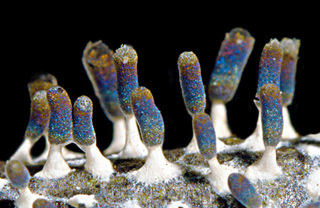
Photograph by Alain Michaud
Diachea leucopodia (Bull.) Rostaf.
This and other slime molds are sensitive to environmental conditions.
They are easily collected and studied by community research teams.
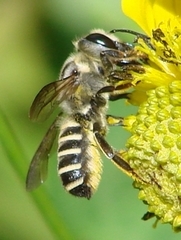
Photograph by John Ascher
Megachile inimica Cresson, 1872
Bees and other pollinators provide an essential service to many crops and natural plant communities.
|