|
80x5 -
240x3 -
240x4 -
320x1 -
320x2 -
320x3 -
640x1 -
640x2
Set display option above.
Click on
images to enlarge. |
© The Eumycetozoan Project, 2006
· 0
Lycogala conicum |
© The Eumycetozoan Project, 2006
· 0
Lycogala conicum |
|
© The Eumycetozoan Project, 2006
· 0
Lycogala conicum |
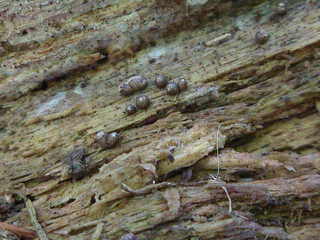
© The Eumycetozoan Project, 2006
· 0
Lycogala conicum |
|
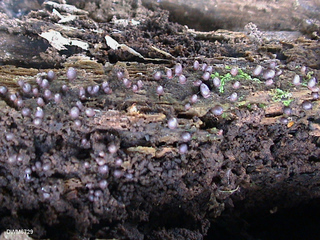
© The Eumycetozoan Project, 2006
· 0
Lycogala conicum |
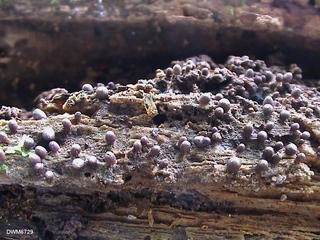
© The Eumycetozoan Project, 2006
· 0
Lycogala conicum |
|
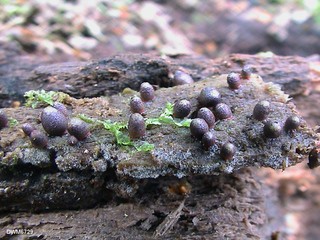
© The Eumycetozoan Project, 2006
· 0
Lycogala conicum |
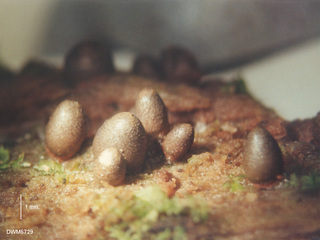
© The Eumycetozoan Project, 2006
· 0
Lycogala conicum |
|
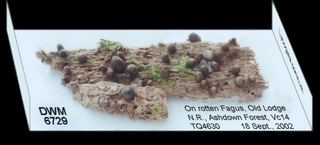
© The Eumycetozoan Project, 2006
· 0
Lycogala conicum |
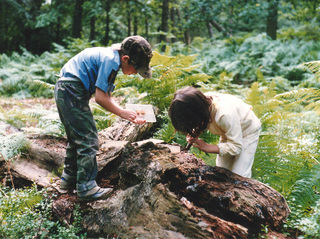
© The Eumycetozoan Project, 2006
· 0
Lycogala conicum |
|
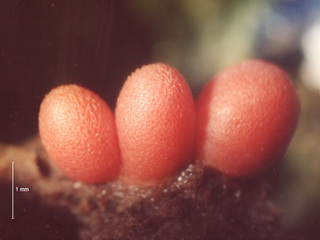
© The Eumycetozoan Project, 2006
· 0
Lycogala conicum |
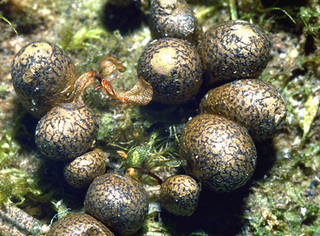
© The Eumycetozoan Project, 2006
· 0
Lycogala conicum |
|
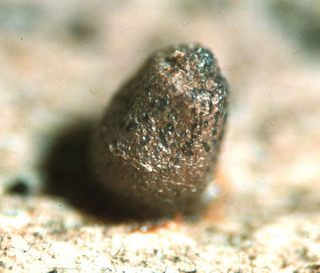
© The Eumycetozoan Project, 2006
· 0
Lycogala conicum |
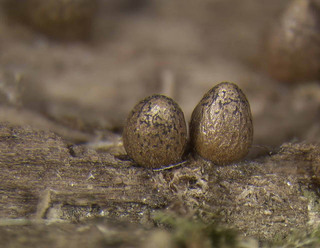
© The Eumycetozoan Project, 2006
· 0
Lycogala conicum |
|
Overview | |
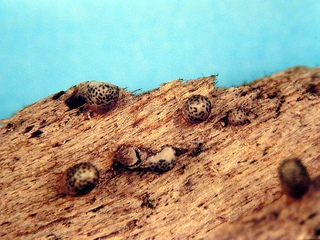
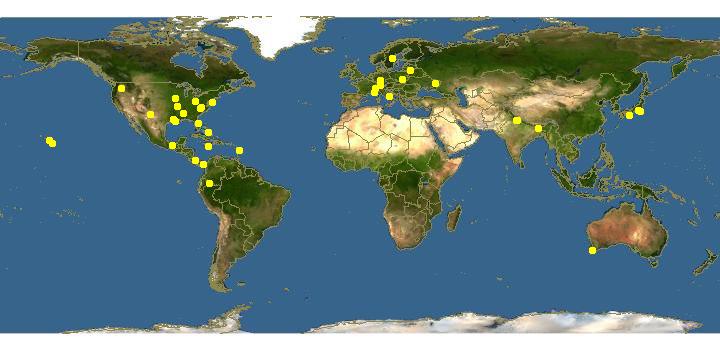
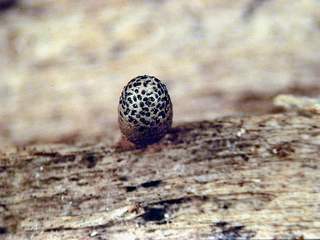
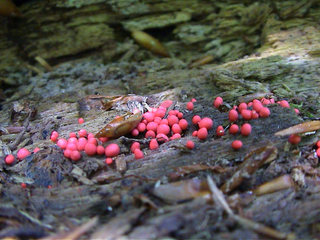
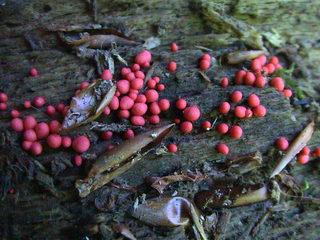
Plasmodium pink. Aethalia dispersed or in groups, conical or ovoid, 1.5-3 mm tall and 0.8-1.5 mm diam., beige, but darker above due to irregular, dark, ± branched scales which form a broken reticulum. Hypothallus inconspicuous. Cortex sturdy, the middle layer consisting of tubules, dehiscing irregularly at the apex, rather persistent. Pseudocapillitium consisting of irregularly shaped tubules 3-10 µm diam., smooth or minutely warted. Spore-mass bright pink, later yellowish-grey. Spores almost colourless, 5-7 µm diam., covered with a fine reticulum of narrow ridges interrupted at the germination area. An inconspicuous species appearing on rotten wood especially of deciduous trees. Distinguished by its subconical aethalia.
|
|
|
Links to other sites | |
|
|
|
References |
- Eliasson,U., Sunhede, S. 1980: External structure of peridium, pseudocapillitium and spores in the myxomycete genus Lycogala Adans.. Botaniska notiser 133: 351-361.
- Zeller,L., Toth, S. 1977: Myxomycetes data from Hungary II.. Annales Universitatis Scientiarum Budapestinensis de Rolando Eötvös Nominatae.Sectio biologica 18 bis 19: 137-154.
|
|
|
Acknowledgements | |
The Eumycetozoan Project -- working to understand the ecology, sytematics and evolution of myxomycetes, dictostelids and protostelids -- the true slime molds.
Sponsored by grants from the National Science Foundation.
|
|
|
Feedback |
Please send any corrections and comments about this page to John Shadwick
Department of Biological Sciences, University of Arkansas, Fayetteville, AR 72701, USA
email: jshadwi@uark.edu phone: USA-479-575-7393.
|
|
| Supported by | |
Updated: 2024-04-27 17:00:40 gmt
|