Discover Life | Overview | Research protocol & rules | Teams | Albums | Identification guides | Maps | Scores
The Goldenrod Challenge

The challenge is simple -- can you, or your team, photograph more species associated with goldenrods than your competitors? All ages and all levels of experience are welcome to join in the fun. In December, after goldenrod flowering is over and photographed species identified and tallied, we will announce winners, award prizes, and celebrate life.

Xylocopa virginica
Photograph by Sammy Pickering, 2006
Xylocopa virginica on Solidago
Eastern carpenter bee on goldenrod

Updated: 28 September, 2008

Discover Life | Overview | Research protocol & rules | Teams | Albums | Identification guides | Maps | Scores | Top

Overview

Please participate and help scientists research the impact of climate change, invasive species, and other factors on the distribution, abundance, and interactions of pollinators, plants, and other organisms.

Organizers

    We plan to study sites in 50 counties across North America this fall. Our organizers at the American Museum of Natural History (John Ascher), National Wildlife Federation (Sue Sturges), National Park Service (Mark DePoy), National Biological Information Infrastructure (Annie Simpson), Lost Ladybug Project (John Losey), and Discover Life (John Pickering) invite you to join us.

Technical support


Goals
  • The Goldenrod Challenge is a fun entry point into learning about nature through photography. Our larger educational goal is to provide the means for you to discover what is known (and unknown) about all the living things that you find exploring schoolyards, neighborhoods, parks, and other outdoor areas. Participants will start personal electronic 'life lists' -- albums of digital photographs to document and map when and where they see species. These life lists will help you learn about nature and share your experiences.
  • Our scientific goal is to understand the impact of weather and other environmental changes on the distribution, abundance and interactions of species at continental scales. By combining data from participants' personal life lists and filtering them to include only high-quality observations, we will be able to better understand, and ultimately manage, thousands of species around the planet.

World's smallest vultures

Can you find the six species in this image? What are they doing? Can you describe their ecological relationships with each other?
Click on the image, scroll to the bottom, set the resolution, then click on each image to advance to the next.


Why goldenrods?

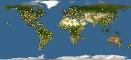
Goldenrods are plants in the genus Solidago. Their native range is centered in North America and Western Europe (see map). There are about 140 species worldwide, half of which occur in North America. While goldenrods are beautiful, some are invasive weeds. They plague parts of Italy, for example.

In much of North America, particularly east of the Rocky Mountains, goldenrods often grow in dense patches of showy yellow flowers. Flowering starts around August in northern states and ends around November in southern states. Goldenrod patches attract large numbers of insects, spiders, and other arthropods that are active in the fall. From our perspective, goldenrod patches serve as fantastic natural "traps" for us to photograph and compare these species-rich communities over time and space.


click on map for distributional details


Embracing technology

Digital technology has captured the hearts and minds (and hands) of the younger generation. Instead of exploring the woods and playing outside like their grandparents did, many children now occupy their spare time inside with video games and computers. Richard Louv's "Last Child in the Woods: Saving Our Children from Nature-Deficit Disorder" is a call for action. How do we get people back outside and to the healthy benefits of interacting with nature?

The Goldenrod Challenge hopes to engage participants by combining the natural world, cool technology, team work, and a spirit of competition. Let's embrace the technology that motivates millions of people to share photographs through social networking sites, compete in on-line games, and solve the challenges of Lara Croft's addictive virtual world. But let's make it even more challenging and exciting. Let's combine the wonders of our real and virtual worlds.

Some reasons to get outside with a camera and participate:

  • nature's complexity never gets boring and exceeds even the most sophisticated computer games;
  • hunting for species appeals to parts deep in our hunter-gatherer brains;
  • successfully photographing a moving insect on a flower on a windy day requires more skillful hand-eye coordination (and patience) than using a joy-stick to kick-box an opponent or race around a virtual track;
  • identifying unknown species is a task that requires more interactive skills than Google possesses -- it requires team work;
  • building a winning 'life list' could keep you engaged for years, providing enjoyment from childhood to old-age;
  • the information you collect and share will be more beneficial to science, society, and the environment than all your "friends" and their photographs on your social networking site.


Camera requirements

The Dime Test -- Can you read "E PLURIBUS UNUM" on your photograph of a dime? If so, you and your camera pass. You can take sufficiently high-quality close-up photographs to win the Goldenrod Challenge. But will you?

zoom in

Practice -- Now try a moth near a light at night! And, again. And, again. The secret is a steady hand or to use a flash and set your camera's shutter speed to as fast as possible. If possible, try it at 1/500th second.

Suggested cameras -- If your camera doesn't work well, try using a

Discover Life | Overview | Research protocol & rules | Teams | Albums | Identification guides | Maps | Scores | Top

How to participate (more details to be added soon; including a how-to video by Dick Walton)

  1. Find a partner -- For enjoyment and safety reasons, we want you to work together. So ask a friend or family member to join a team with you or form a new team together (see existing teams).
  2. Get a digital camera -- Get access to a digital camera that passes the "dime test" and can take close-up photographs of insects.
  3. Photograph goldenrods -- Take photographs of the species associated with any flowering goldenrod in your county. [Team captains can post local "Goldenrod events" on Discover Life by contacting Joe Carley (dl@discoverlife.org or 706-542-6676). They will be posted here.]
  4. Get a photo album and install software -- Ask for a personal photo album on Discover Life for each team member from Joe and then install secure upload software on your Mac or PC.
  5. Upload images -- Upload your photographs to your album (see existing albums), documenting when and where you took each. (You'll need a photo album and password from Joe as explained in the previous step.)
  6. Identify species -- Identify the species in your photographs with the help of our on-line identification guides, other participants, and taxonomic experts. (See identification guide, as a starting point.)
  7. Choose personal best -- Select your "best" photograph for each species and put them into an on-line personal slideshow. Mimicry & camouflage and fall insects are example slide shows. Click on each image to go to the next.
  8. Choose team best -- Team captains select the "best" photograph for each species into an on-line team slideshow.
  9. Choose county best -- If multiple teams compete within a county, they should join forces and select the "best" photograph for each species into an on-line, county-wide slideshow.
  10. Judging -- We will score slide shows for the number of different species each contain, judging them at individual, team, and county levels.
  11. Life List -- Whether you win or lose, celebrate life. You now have a personal life list.
  12. Keep going -- Add more species to it for the rest of your life.


Research protocol & rules

What photographs should you submit and which count towards prizes?

Winners will photograph and document more insects, spiders, and other target species in goldenrod patches during the flowering season than their competitors. Besides the invertebrates you photograph on plants in goldenrod patches, what other species should you photograph and which will count toward winning a prize?

First and foremost, as part of Discover Life's broader mission, we encourage you to get outside and take photographs of nature -- any species, any time, any place! Even if a species isn't associated with a goldenrod patch, you may include its photograph in your album and add it to your life list.

The Goldenrod Challenge addresses how weather and geography affect the diversity and abundance of species, the specificity of plant-insect and predator-prey interactions, the phenology and synchrony of populations, and the impact of non-native species on native ones. We aim to get the best data possible by focusing on specific target groups of organisms. We will award the cash prizes and four 'Best' book prizes described below for photographs of species in the following target groups:

We will award the six 'Most' book prizes described below for photographs of any species taken while in a goldenrod patch, including trees and other plants that are not in flower, circling vultures, etc.

Take the highest-resolution jpg images that your camera allows. Submit originals. Do not crop or otherwise manipulate your images.

For species that cannot be identified reliably from photographs, except for vertebrates, we will give credit to participants who identify them to species group, genus, tribe, family, ..., whatever is practical. However, we will only count one such partially identified species per higher taxon.

Winners must take all their own photographs and submit the originals jpgs as taken by their camera. You may not share or trade photographs, but you may help teammates to find different species in the field. Contributors retain the copyright to their images but agree to allow Discover Life to use them. Unless a contributing photographer request otherwise, Discover Life will display the photographer's name below each image with a link to our copyright policy & terms of use page.

Camera settings

Discover Life | The Polistes Foundation | Top